
Minnesota Administrative Rules
CHAPTER 9810, CANNABIS
OFFICE OF CANNABIS MANAGEMENT
| Part | Title |
|---|---|
| 9810.0100 | SCOPE; PURPOSE; APPLICATION. |
| 9810.0200 | DEFINITIONS. |
| 9810.1000 | LICENSE LIMITS. |
| 9810.1001 | DISQUALIFYING OFFENSES. |
| 9810.1002 | APPEAL. |
| 9810.1003 | PETITIONING THE OFFICE. |
| 9810.1100 | GENERAL OPERATIONS. |
| 9810.1101 | PRODUCT RECALL. |
| 9810.1102 | CANNABIS AND HEMP WORKERS. |
| 9810.1103 | PRODUCT SAMPLES. |
| 9810.1104 | PRODUCT STORAGE. |
| 9810.1200 | ENVIRONMENTAL STANDARDS AND DISPOSAL. |
| 9810.1300 | TRACK AND TRACE; GENERAL REQUIREMENT. |
| 9810.1301 | TRACK AND TRACE; SYSTEM ADMINISTRATION. |
| 9810.1302 | TRACK AND TRACE; INVENTORY AND TRACKING REQUIREMENTS. |
| 9810.1400 | PACKAGING AND LABELING REQUIREMENTS. |
| 9810.1401 | PACKAGING AND LABELING REQUIREMENTS FOR RETAIL SALE. |
| 9810.1402 | PACKAGING AND LABELING FOR MEDICAL PATIENTS. |
| 9810.1403 | PACKAGING AND LABELING PROHIBITIONS. |
| 9810.1500 | SECURITY. |
| 9810.2000 | CULTIVATION. |
| 9810.2100 | APPROVED PRODUCT CATEGORIES AND CANNABINOIDS. |
| 9810.2101 | PRODUCTION AND POTENCY LIMITS. |
| 9810.2102 | MANUFACTURING. |
| 9810.2203 | DRIED CANNABIS FLOWER PRODUCT; MANUFACTURING REQUIREMENTS. |
| 9810.2204 | INGESTIBLE CANNABIS PRODUCT; MANUFACTURING REQUIREMENTS. |
| 9810.2205 | CANNABIS AND HEMP CONCENTRATE; MANUFACTURING REQUIREMENTS. |
| 9810.2300 | TRANSPORTATION. |
| 9810.2400 | WHOLESALE. |
| 9810.2500 | GENERAL RETAIL. |
| 9810.2501 | ADULT-USE CANNABIS RETAIL. |
| 9810.2502 | MEDICAL CANNABIS RETAIL. |
| 9810.2503 | RETAIL SALES OF LOWER-POTENCY HEMP EDIBLES. |
| 9810.2600 | DELIVERY. |
| 9810.2700 | EVENTS. |
| 9810.3000 | TESTING FACILITY STANDARDS. |
| 9810.3100 | PRODUCT TESTING AND PRODUCT SAMPLING PROTOCOLS. |
| 9810.4000 | MEDICAL CANNABIS PATIENT REGISTRY; PATIENT ENROLLMENT. |
| 9810.4001 | MEDICAL PATIENT REGISTRY; CAREGIVER ENROLLMENT. |
| 9810.4003 | MEDICAL CANNABIS PATIENT REGISTRY; HEALTH CARE PRACTITIONER QUALIFICATIONS AND DUTIES. |
| 9810.4100 | MEDICAL CANNABIS CONSULTANT PROGRAM. |
| 9810.4200 | MEDICAL CANNABIS COMBINATION BUSINESS. |
| 9810.5000 | LOCAL GOVERNMENTS. |
9810.0100 SCOPE; PURPOSE; APPLICATION.
This chapter is promulgated pursuant to Minnesota Statutes, chapter 342, and Minnesota Statutes, section 14.002. This chapter is promulgated to carry out Minnesota Statutes, chapter 342, and to facilitate the full and uniform implementation, enforcement, and application of Minnesota Statutes, chapter 342. This chapter applies to all cannabis and hemp businesses subject to the provisions of Minnesota Statutes, chapter 342, that are licensed, authorized to do business, or otherwise doing business in Minnesota, except that nothing in this chapter:
A.
abrogates the sovereignty of the 11 federally recognized Tribes sharing territorial boundaries with Minnesota; or
Statutory Authority:
MS s 342.02
History:
49 SR 1143
Published Electronically:
April 25, 2025
9810.0200 DEFINITIONS.
Subpart 1.
Scope.
For the purposes of this chapter, the terms defined in Minnesota Statutes, chapter 342, have the meanings given them.
Subp. 2.
Acceptance criteria.
"Acceptance criteria" means the conditions that must be satisfied for a product to be accepted.
Subp. 3.
AOAC International.
"AOAC International" means the Association of Official Analytical Collaboration International.
Subp. 4.
Authorized event retailer.
"Authorized event retailer" means any licensed retailer authorized by the office to make retail sales at a cannabis event.
Subp. 5.
Authorized personnel.
"Authorized personnel" means one or more individuals authorized or assigned by the regulated business or the business's designee to perform a specific type of duty or to be at a specific location.
Subp. 6.
Cannabis clone.
"Cannabis clone" means a cannabis plant that is propagated from a cannabis cutting.
Subp. 7.
Cannabis cultivator.
"Cannabis cultivator" means a person, cooperative, or business authorized by the office to cultivate cannabis plants for sale.
Subp. 8.
Cannabis cutting.
"Cannabis cutting" means the vegetative material removed from a cannabis mother plant that is intended to be used for propagation, including plant tissue for use in tissue culture.
Subp. 9.
Cannabis delivery vehicle.
"Cannabis delivery vehicle" means a motor vehicle used by a cannabis delivery service to transport regulated products to a customer, patient, or designated caregiver.
Subp. 10.
Cannabis mother plant.
"Cannabis mother plant" means a female cannabis plant intentionally maintained in a nonflowering vegetative state for the purpose of producing cannabis cuttings.
Subp. 11.
Cannabis retailer.
"Cannabis retailer" means a cannabis business, as defined in Minnesota Statutes, section 342.01, subdivision 14, that holds:
Subp. 13.
Cannabis transport vehicle.
"Cannabis transport vehicle" means a vehicle used by a cannabis transporter to transport regulated products to a license holder.
Subp. 14.
Cannabis volunteer.
"Cannabis volunteer" means any individual whose scope of work involves that of a cannabis worker, but who does not, and is not required under applicable local, state, or federal law to, receive compensation for those services.
Subp. 15.
Cannabis waste.
"Cannabis waste" means discarded cannabis materials created from the cultivation, harvesting, processing, manufacturing, packaging, storage, transport, delivery, or sale of products of the cannabis industry or the hemp consumer industry.
Subp. 16.
Caregiver.
"Caregiver" means a patient's registered designated caregiver or a patient's parent, legal guardian, or spouse acting as a registered designated caregiver.
Subp. 17.
Certificate holder.
"Certificate holder" means a person who has completed the requisite application and training requirements and has been certified as a medical cannabis consultant by the office.
Subp. 18.
Certified medical cannabis consultant.
"Certified medical cannabis consultant" means a certificate holder who is employed by a cannabis business that has a medical cannabis endorsement.
Subp. 19.
Crop input.
"Crop input" means any substance other than water that is applied to or used in the cultivation of a cannabis plant for the purposes of pest control, plant health, or plant growth management. Crop input includes pesticides, fungicides, plant regulators, fertilizers, soil amendments, plant amendments, and other agricultural products regulated by the Department of Agriculture.
Subp. 20.
Customer.
"Customer" means an individual making a purchase from a licensee that holds a retail license or retail endorsement.
Subp. 21.
Delivery route.
"Delivery route" means a trip from the retail location where a sale originates to a customer delivery location.
Subp. 22.
Dwelling.
"Dwelling" means a physical structure where people live, such as a house, an apartment, or another type of residential structure.
Subp. 23.
Elements of a crime.
"Elements of a crime" means the component parts of a crime that a prosecutor must prove to a judge or jury in order to convict a person of the crime.
Subp. 24.
Excipient.
"Excipient" means an inert substance formulated alongside an active ingredient.
Subp. 25.
Growth phase.
"Growth phase" means the designation of stages of development of a live cannabis plant as a seedling, immature plant, vegetative plant, and flowering plant.
Subp. 26.
Hazardous cannabis waste.
"Hazardous cannabis waste" means cannabis waste that meets the definition of hazardous waste in Minnesota Statutes, section 116.06, subdivision 11.
Subp. 27.
Homogenized composite batch sample.
"Homogenized composite batch sample" means a representative sample as defined in subpart 52 that is homogenized prior to sample analysis.
Subp. 29.
Immature cannabis plant.
"Immature cannabis plant" means any nonflowering plant of the genus Cannabis. Immature cannabis plant includes a cannabis clone, a cannabis cutting, a cannabis seedling, and a cannabis mother plant. Immature cannabis plant does not include industrial hemp as defined in Minnesota Statutes, chapter 18K.
Subp. 30.
Ingestible cannabis product.
"Ingestible cannabis product" means a cannabis product designed to be orally ingested, such as a food product or drink infused with cannabis or a cannabis product that is intended to be swallowed.
Subp. 31.
In-process product.
"In-process product" means a regulated product that has been transformed from raw cannabis or hemp but has not yet become the final form in which the product will be sold to consumers.
Subp. 33.
Kief.
"Kief" means the granular excess plant material and loose trichomes resulting from the grinding, sifting, or other manufacturing of dried cured cannabis flower or plants.
Subp. 34.
Limited-access area.
"Limited-access area" means an area of a cannabis business that is accessible only by individuals who are over 21 years of age.
Subp. 35.
Lower-potency hemp retailer.
"Lower-potency hemp retailer" means a hemp business, as defined in Minnesota Statutes, section 342.01, subdivision 34, that holds a valid lower-potency hemp edible retail license.
Subp. 36.
Manufacturing.
"Manufacturing" means the process by which cannabis flower or plants, cannabis concentrates, artificially derived cannabinoids, hemp plant parts, or hemp concentrates are prepared into usable consumer products or products intended for further processing.
Subp. 37.
Manufacturing facility.
"Manufacturing facility" means the building or area in which useable or consumable cannabis and hemp products are processed or otherwise prepared to be useable or consumable products.
Subp. 38.
Marketing layer.
"Marketing layer" means the outermost layer of a retail sale container that is predominantly apparent and visible, such as a box or bag that another container containing saleable cannabis product or cannabis flower is in. If the container consists of only a single layer, then the outer surface of the container is the marketing layer.
Subp. 39.
Mature cannabis plant.
"Mature cannabis plant" means any flowering plant of the genus Cannabis. Mature cannabis plant does not include industrial hemp as defined in Minnesota Statutes, chapter 18K.
Subp. 40.
Medical cannabis retailer.
"Medical cannabis retailer" means a cannabis medical combination business or a cannabis business with a medical cannabis retail endorsement to provide medical cannabis flower, medical cannabinoid products, and medical cannabis paraphernalia to a patient or designated caregiver.
Subp. 41.
Nonhazardous cannabis waste.
"Nonhazardous cannabis waste" means cannabis waste that does not meet the definition of hazardous waste in Minnesota Statutes, section 116.06, subdivision 11.
Subp. 43.
Outdoor mixed-light facility.
"Outdoor mixed-light facility" means a hoop house, greenhouse, or other structure with nonrigid walls that uses natural light, in whole or in part, for cultivation.
Subp. 44.
Patient household.
"Patient household" means the residence in which at least one patient resides.
Subp. 45.
Patient self-evaluation.
"Patient self-evaluation" or "self-evaluation" means the assessment of patient symptom management and side effects throughout the patient's medical cannabis treatment collected by the office as part of the research evaluation under Minnesota Statutes, section 342.54, subdivision 3.
Subp. 46.
Person subject to guardianship.
"Person subject to guardianship" has the meaning given in Minnesota Statutes, section 524.5-102, subdivision 13b.
Subp. 47.
Pharmacist.
"Pharmacist" means a pharmacist licensed under Minnesota Statutes, chapter 151.
Subp. 48.
Point-of-sale system.
"Point-of-sale system" means the combination of hardware, software, and payment services operated by a business to process payments for the purchase of goods and services.
Subp. 49.
Propagation.
"Propagation" means the activity of growing cannabis plants from a cannabis seed, an immature cannabis plant, or another cannabis plant source.
Subp. 50.
Regulated products.
"Regulated products" means all products subject to regulation by the office, including cannabis plants, cannabis flower, medical cannabis flower, cannabis products, artificially derived cannabinoids, lower-potency hemp edibles, hemp-derived consumer products, and hemp-derived topical products.
Subp. 51.
Remediation.
"Remediation" means any process that removes or reduces the level of contaminant or excess cannabinoid in a batch of any product regulated under Minnesota Statutes, chapter 342.
Subp. 52.
Representative sample.
"Representative sample" means a small portion of a larger sample or product that accurately reflects the characteristics of the entire sample or product.
Subp. 53.
Responsible worker.
"Responsible worker" means a worker who is in charge of ensuring that a task is completed and recorded in the statewide monitoring system.
Subp. 54.
Restricted-access area.
"Restricted-access area" means an area of a cannabis business that is accessible only to authorized cannabis workers.
Subp. 55.
Retail area.
"Retail area" means the space within a cannabis business or hemp business used to conduct retail sales.
Subp. 56.
Retail sale.
"Retail sale" means a transfer of products from a retailer to a customer, patient, or designated caregiver.
Subp. 57.
Retailer.
"Retailer" means any cannabis retailer, medical cannabis combination business operating a retail location, or lower-potency hemp retailer that holds a valid applicable retailer license.
Subp. 58.
Saleable cannabis product.
"Saleable cannabis product" means a manufactured cannabis product that is prepared for sale.
Subp. 59.
Sample.
"Sample" means a sample of products sold by the retailer that is not for sale and is displayed for customers to observe and smell.
Subp. 60.
Security event.
"Security event" means any potential or actual unauthorized access or compromise of a cannabis business's physical location or electronic systems.
Subp. 61.
Smokeable cannabis product.
"Smokeable cannabis product" means a product containing cannabis flower or cannabis concentrate consumed by combustion or vaporization and inhalation of smoke, aerosol, or vapor from the product.
Subp. 62.
Solvent.
"Solvent" means a substance that is capable of solubilizing cannabinoids extracted from cannabis or hemp plants.
Subp. 63.
System administrator.
"System administrator" means an individual who is an owner or employee of a cannabis business and manages access to the statewide monitoring system and access permissions for all other employees of the cannabis business.
Subp. 64.
System inventory.
"System inventory" means a cannabis business's inventory of all regulated products.
Subp. 65.
System user.
"System user" means an individual who is an owner or employee of a cannabis business, other than a system administrator, and is permitted to access the statewide monitoring system.
Subp. 66.
Terpene profile.
"Terpene profile" means the specific combination and concentration of terpenes.
Subp. 68.
Tincture.
"Tincture" means a solution that is:
A.
derived either directly from a hemp or cannabis plant or from a manufactured hemp or cannabis extract;
Subp. 69.
Trim.
"Trim" means cannabis plant material that is intentionally removed as part of the cultivation process.
Subp. 70.
Vegetative plant.
"Vegetative plant" means a cannabis plant that is over eight inches in height but has no observable buds or flowers.
Subp. 71.
Volunteer cannabis plant.
"Volunteer cannabis plant" means a cannabis plant that results from a seed or root that is not intentionally planted or grown.
Subp. 72.
Wholesale distribution.
"Wholesale distribution" means the distribution of product between cannabis businesses or hemp businesses in the stages of cannabis or hemp production. Wholesale distribution excludes transfers between physical locations operating under a single ownership structure or single license issued by the office.
Statutory Authority:
MS s 342.02
History:
49 SR 1143
Published Electronically:
April 25, 2025
9810.1000 LICENSE LIMITS.
Subpart 1.
Cannabis cultivator.
No person that holds a cannabis cultivator license may hold more than one cannabis cultivator license.
Subp. 2.
Cannabis manufacturer.
No person that holds a cannabis manufacturer license may hold more than one cannabis manufacturer license.
Subp. 3.
Cannabis retailer.
No person that holds a cannabis retailer license may hold more than one cannabis retailer license.
Subp. 4.
Cannabis wholesaler.
No person that holds a cannabis wholesaler license may hold more than one cannabis wholesaler license.
Subp. 5.
Cannabis transporter.
No person that holds a cannabis transporter license may hold more than one cannabis transporter license.
Subp. 6.
Cannabis testing facility.
No person that holds a cannabis testing facility license may hold more than three cannabis testing facility licenses.
Subp. 7.
Cannabis delivery service.
No person that holds a cannabis delivery service license may hold more than one cannabis delivery service license.
Statutory Authority:
MS s 342.02
History:
49 SR 1143
Published Electronically:
April 25, 2025
9810.1001 DISQUALIFYING OFFENSES.
Subpart 1.
Disqualifying criminal offenses.
A cannabis license holder, an applicant, or, in the case of a business entity, every individual responsible for conducting the affairs of the entity, including every owner and every cooperative member or director, manager, and general partner of the business entity, who has been convicted of any crime listed in this subpart is disqualified from holding a license under this chapter.
A.
The following offenses under Minnesota law are disqualifying offenses:
(1)
Noncannabis, controlled substance crimes:
(c)
Minnesota Statutes, section 152.0262 (possession of substances with intent to manufacture methamphetamine crime);
(d)
Minnesota Statutes, section 152.0264, subdivision 1, clause (1) (sale of cannabis to a minor);
(2)
Human trafficking or labor trafficking crimes:
(3)
Fraud or financial crimes:
(h)
a felony violation of Minnesota Statutes, section 609.52, subdivision 2, paragraph (a), clause (3), (4), (15), or (16), if the violation involves an insurance company as defined in Minnesota Statutes, section 60A.02, subdivision 4; a nonprofit health service plan corporation regulated under Minnesota Statutes, chapter 62C; a health maintenance organization regulated under Minnesota Statutes, chapter 62D; or a fraternal benefit society regulated under Minnesota Statutes, chapter 64B (insurance fraud);
B.
A license holder or an applicant who has been convicted of an attempted crime under Minnesota Statutes, section 609.17, or conspiring with another to commit a crime under Minnesota Statutes, section 609.175, is disqualified from holding a license under this chapter if the underlying crime is listed in item A.
C.
A license holder or an applicant is disqualified from holding a license under this chapter if:
(1)
the license holder or applicant was convicted in another state or federal court of a crime; and
D.
A cannabis license holder or an applicant for a license is not disqualified from holding a license if:
(1)
the license holder or applicant was charged with a drug-related crime listed in Minnesota Statutes, section 152.18, subdivision 1, paragraph (a);
(3)
a court stayed adjudication of the crime pursuant to Minnesota Statutes, section 152.18, subdivision 1; and
(4)
the court dismissed the proceedings against the license holder or applicant and discharged the license holder or applicant from probation.
E.
A cannabis license holder or an applicant for a license is not disqualified from holding a license based on the license holder's or applicant's conviction for violating Minnesota Statutes 1988, section 152.09, if the license holder's or applicant's conviction was expunged according to Minnesota Statutes, section 152.18, subdivision 3.
Subp. 2.
Disqualifying civil offenses.
A.
A cannabis license holder or an applicant must be disqualified from holding or receiving a cannabis business license for any violation of a statute substantiated by another agency, local unit of government, or other jurisdiction whose statutory or regulatory authority is recognized by this chapter if the office determines that the substantiated violation creates a risk to public health or safety.
B.
A cannabis license holder or an applicant is disqualified from holding or receiving a cannabis business license in Minnesota if another state's cannabis authority has previously disqualified, revoked, or prohibited the cannabis license holder or applicant from operating in that jurisdiction.
C.
A cannabis license holder or an applicant is disqualified from holding or receiving a cannabis business license if the license holder or applicant, without holding a cannabis or hemp license issued by the office, has violated Minnesota Statutes, chapter 342, and was issued an administrative order under Minnesota Statutes, section 342.19, after August 1, 2023.
Subp. 3.
Length of disqualification.
A.
For disqualifications under subpart 1, item A, subitem (4), a license holder's or an applicant's disqualification expires five years from the date of the license holder's or applicant's conviction.
B.
For disqualifications under subpart 2, item C, a license holder's or an applicant's disqualification expires five years from the date of the office's administrative order.
C.
For disqualifying felony convictions, the length of a license holder's or applicant's disqualification is permanent.
Subp. 4.
Permanent disqualification variance.
A.
A cannabis license holder or an applicant whose disqualification is permanent under subpart 3 may seek to have a nonpermanent disqualification if the license holder or applicant provides evidence to the office demonstrating that a permanent disqualification does not serve the public interest. The office must use the criteria in item B to determine whether a cannabis license holder's or an applicant's permanent disqualification would not be in the public interest.
B.
A cannabis license holder or applicant may establish that a permanent disqualification does not serve the public interest by providing the office with:
(1)
information regarding the nature and responsibility of the position that the cannabis license holder or applicant with a conviction would hold, has held, or currently holds in the cannabis business;
(3)
information regarding the age of the cannabis license holder or applicant when the felony was committed;
(5)
information demonstrating that at least five years has elapsed since the cannabis license holder's or applicant's release from incarceration for the related offense or the license holder's or applicant's conviction, whichever is more recent;
(7)
any evidence of the license holder's or applicant's rehabilitation, including:
(b)
recommendations of people who have supervised the license holder or applicant while the license holder or applicant was on probation, in a work environment, or participating in a mentorship; and
(8)
information regarding any benefit to the community that would result from granting a license to the applicant or renewing the license holder's license.
Statutory Authority:
MS s 342.02
History:
49 SR 1143
Published Electronically:
April 25, 2025
9810.1002 APPEAL.
For any contested hearing under Minnesota Statutes, chapter 342, the Office of Administrative Hearings is the agent authorized under Minnesota Statutes, section 342.21, subdivision 2, to conduct hearings, receive evidence, administer oaths, and examine witnesses. The hearing record in such cases must be developed according to parts 1400.5010 to 1400.8401 and Minnesota Statutes, sections 14.48 to 14.62.
Statutory Authority:
MS s 342.02
History:
49 SR 1143
Published Electronically:
April 25, 2025
9810.1003 PETITIONING THE OFFICE.
Subp. 2.
Petition process.
A.
To file a petition for approval with the office, an applicant must provide:
(2)
if applicable, evidence supporting the ability of the cannabinoid product to be manufactured, packaged, labeled, and sold in compliance with this chapter;
(3)
if applicable, proposed testing protocols for the product, including:
(a)
identification of the applicable categories listed in part 9810.3100, subpart 5, item B, which are appropriate for testing;
(b)
proposed acceptance criteria for contamination levels in each identified category in part 9810.3100, subpart 5, item B; and
(c)
scientific research from peer-reviewed sources that supports the proposed testing protocols; and
(4)
if applicable, scientific research from peer-reviewed sources demonstrating that the cannabinoid product is safe for human use.
B.
Beginning January 1, 2026, the office may consider petitions for approvals that are received by the office between the first and last business day in July.
C.
No later than December 1 of the year in which the office receives the petition, the office must notify the petitioner of the office's decision regarding the petition and publish the office's decision on the office's website.
Statutory Authority:
MS s 342.02
History:
49 SR 1143
Published Electronically:
April 25, 2025
9810.1100 GENERAL OPERATIONS.
Subpart 1.
Compliance with existing laws.
A cannabis business must comply with all applicable state regulations governing the business's activities authorized by the office.
Subp. 2.
Standard operating procedures.
A.
A cannabis business and hemp business must establish and maintain written and up-to-date standard operating procedures in accordance with Minnesota Statutes, chapter 342. Standard operating procedures must include:
(1)
the implementation procedures for the general operational requirements of cannabis businesses or hemp businesses under Minnesota Statutes, chapter 342;
(4)
the creation and entry of accurate data in the statewide monitoring system pursuant to parts 9810.1300 to 9810.1302 and Minnesota Statutes, section 342.24, subdivision 5;
(5)
as described in part 9810.1104, the safe and sanitary storage of cannabis plants, cannabis flower, and cannabis products, including maintaining the cleanliness of any building or equipment that the business uses to store or display cannabis plants, cannabis flower, and cannabis products;
(6)
as required under part 9810.1200, the proper segregation and disposal of a regulated product that:
(7)
the proper designation of authorized personnel for specified duties of the cannabis business or hemp business and the procedure for issuing necessary worker identification for restricted-access areas.
(8)
the proper designation of authorized personnel who have the authority to access, enter, and update private and nonpublic consumer data;
(9)
the procedure for responding to a data security breach, consistent with Minnesota Statutes, sections 325E.61 and 325E.64;
(10)
if applicable, the procedure for providing samples of the business's regulated products for testing and research purposes as required by part 9810.3100; and
(11)
the procedure for reporting all potential substances that the business uses during cultivating, manufacturing, and packaging processes to a testing facility licensed under Minnesota Statutes, chapter 342, for batch safety testing.
B.
Standard operating procedures must be available on-site to all personnel and to the office upon request.
Subp. 3.
Record keeping.
A.
Financial records must be maintained according to this item.
(1)
A cannabis business must maintain accurate and comprehensive financial records.
(a)
A cannabis business must maintain financial records identified in subitem (2) for the current fiscal year and previous three fiscal years or, if the business has existed for less than three years, for the length of time the business has been licensed to conduct business. A cannabis business must make all financial records available to the office for inspection upon the office's request.
(b)
Tax records must be available for the office's inspection for the previous ten fiscal years or, if the business has existed for less than ten years, the number of tax years the cannabis business has been licensed to conduct business.
(2)
A cannabis business must maintain accurate and comprehensive financial records prepared in accordance with generally accepted accounting principles to document income and expenses, including:
B.
A cannabis business must comply with the record-keeping requirements in this item.
(1)
A cannabis business must maintain the following records for three calendar years:
(2)
A cannabis business must make all records in subitem (1) available for inspection by the office upon request.
C.
A cannabis business must keep all records in a uniform manner and ensure that the records are easily accessible so that the business can provide the records to the office within 24 hours of the office's request.
Subp. 4.
Dwelling prohibitions.
A cannabis business must not conduct an activity authorized by the office in a dwelling. A cannabis business must conduct an activity approved by the office in an area of the premises that personnel may access without passing through a dwelling space. This subpart does not apply to an activity that an individual is specifically authorized to conduct under Minnesota Statutes, section 342.09.
Subp. 5.
Multiple locations.
A license holder endorsed for multiple activities may perform each activity at a separate location if the license holder provides information about the location to the office and receives any required local government permission to conduct the activity at the location. Multiple license holders must not occupy or conduct activities authorized by the office on the same premises.
Subp. 6.
General facilities required.
Any physical location or site where employees routinely conduct activities authorized by the office must:
A.
have at least one toilet facility located on the premises in a completely enclosed room with a tight-fitting and self-closing door. Unless a toilet facility is being cleaned or maintained, the toilet room door must be kept closed; and
B.
comply with chapter 5205; Minnesota Statutes, chapter 182; Code of Federal Regulations, title 29, part 1910; and all Minnesota state building and fire codes and applicable federal and state environmental and workplace safety requirements and policies.
Subp. 7.
Weighing and measuring equipment.
A cannabis business that owns or operates weighing or measuring equipment for the purpose of entering data in the statewide monitoring system must comply with chapter 7601. A cannabis business must develop and use written procedures to ensure the consistent and accurate use of weighing and measuring equipment for mandatory controls and the accurate entry of weights and measurements into the statewide monitoring system. A cannabis business must maintain weighing and measuring equipment in a sanitary manner that does not contaminate any products.
Statutory Authority:
MS s 342.02
History:
49 SR 1143
Published Electronically:
April 25, 2025
9810.1101 PRODUCT RECALL.
Subpart 1.
Factors for recall.
The office must require a license holder to recall any regulated product if the office has evidence that the regulated product:
A.
contains a contaminant level exceeding the acceptance criteria established by the office for foreign material, heavy metals, microbiological contaminants, mycotoxins, pesticide residues, or residual solvents;
B.
contains an undeclared allergen, as defined in the Minnesota Food Law, Minnesota Statutes, chapter 31;
D.
was not cultivated or manufactured by a licensed cannabis or hemp business as required by Minnesota Statutes, chapter 342;
Subp. 2.
Mandatory recall process.
Upon the office's request, a license holder must perform a traceback and trace-forward investigation to identify all affected businesses, markets, and consumers and must respond to all information requests made by the office related to the recall within 24 hours of the office's request. The office may take control of a product recall process at any time.
A.
If the office determines that a recall is necessary under subpart 1, the office must:
(1)
issue the license holder a notice of recall with the specific product subject to the recall and the basis for the recall under subpart 1; and
B.
If the office requires that a license holder recall a regulated product, the business must, within one day of receiving notice from the office:
(2)
notify all individuals who may have purchased the recalled product and reimburse individuals for any returned product; and
(3)
ensure that all products subject to the recall are destroyed in accordance with this chapter and record the destruction in the cannabis business's seed-to-sale tracking system.
C.
A license holder must notify the office of the license holder's compliance with item B, subitems (1) to (3), within three days of receiving the notice of recall.
Subp. 3.
Voluntary recall process.
A license holder may initiate a product recall when the license holder has information that a regulated product is mislabeled, defective, or unsafe for consumption. A license holder initiating a recall must:
A.
provide notice of the recall to the office, including a description of the recalled product and the basis for the recall. Upon receipt, the office must post the notice on the office's website with information that the license holder initiated the product recall; and
Statutory Authority:
MS s 342.02
History:
49 SR 1143
Published Electronically:
April 25, 2025
9810.1102 CANNABIS AND HEMP WORKERS.
Subpart 1.
General requirements.
A cannabis business or licensed hemp business must comply with worker safety and health provisions under chapter 5205; Minnesota Statutes, chapter 182; and any standard adopted by the Department of Labor and Industry related to Minnesota Statutes, chapter 182.
Subp. 2.
Worker training and qualifications.
A.
This subpart applies to cannabis workers and cannabis volunteers. This subpart does not apply to hemp workers who do not meet the definition of a cannabis worker in Minnesota Statutes, section 342.01, subdivision 23.
B.
In addition to workplace training required by applicable federal, state, and local laws, a license holder must ensure that a cannabis or hemp worker or volunteer receives annual training that applies to the role, authority, and responsibilities of the cannabis or hemp worker or volunteer. The annual training must include:
(4)
the proper use of security measures and controls that have been adopted by the cannabis business in compliance with part 9810.1500 and Minnesota Statutes, chapter 342;
(5)
procedures on responding to an emergency, including a fire, loss of electrical power, robbery, natural disaster, and workplace violence; and
C.
A license holder must ensure that an edible cannabinoid product handler's endorsement is obtained by any person to whom Minnesota Statutes, section 342.07, subdivision 3, applies.
D.
A license holder must maintain records containing information about each worker who conducts activities authorized by the office, including records that the worker completed training required by this part. The license holder must make the records available to the office upon request.
E.
An applicant or a license holder must include a description of the applicant's or license holder's employee training and education program in the applicant's application for a license or license holder's application for license renewal.
Subp. 3.
Worker safety.
A license holder must ensure that the license holder's premises comply with all applicable federal Occupational Safety and Health Administration workplace safety laws and regulations in accordance with the general duty clause of the Occupational Safety and Health Act (Public Law 91-956) and Code of Federal Regulations, title 29. A license holder must:
B.
prominently display emergency procedures on the premises, including evacuation and shelter-in-place procedures;
C.
under federal and state Right to Know regulations, provide each worker with information about hazardous materials with which the worker may come into contact on the premises; and
D.
provide each worker with information about the procedures for safely handling and operating equipment or tools.
Statutory Authority:
MS s 342.02
History:
49 SR 1143
Published Electronically:
April 25, 2025
9810.1103 PRODUCT SAMPLES.
Subpart 1.
Samples.
A cannabis business must record in the statewide monitoring system any sample or regulated product, except lower-potency hemp edibles, that the business provides to an individual. A cannabis business must not provide a sample or regulated product to a person who is under 21 years of age.
Subp. 2.
Product samples to cannabis businesses.
A.
When providing a sample to a retailer or wholesaler, a cannabis business must:
(2)
provide the sample to a retailer or wholesaler solely for the purpose of business-to-business marketing;
B.
A cannabis business must not sell a sample to another cannabis business, a customer, a patient, or a designated caregiver.
Subp. 3.
Product samples to cannabis workers.
A cannabis business must only provide a sample of a regulated product to a cannabis worker in accordance with this subpart and Minnesota Statutes, section 342.24. When providing a sample to a cannabis worker, a cannabis business must:
Subp. 4.
Nonintoxicating samples.
If a cannabis business produces a sample that is designed to showcase the flavor or texture of an ingestible cannabis product but that does not contain THC, the cannabis business must indicate on the marketing layer that the product does not contain THC.
Statutory Authority:
MS s 342.02
History:
49 SR 1143
Published Electronically:
April 25, 2025
9810.1104 PRODUCT STORAGE.
Subpart 1.
Product storage.
A cannabis business must develop procedures for storing regulated products in a controlled environment. The storage procedures must ensure that regulated products are free from contamination. A cannabis business must ensure that all cannabis or hemp workers employed by the business follow the business's storage procedures and maintain a record of the cannabis or hemp workers' compliance with storage procedures. A cannabis business must ensure that the business's storage procedures and records are readily available for inspection by the office upon request. A cannabis business's storage procedures must include the following requirements.
A.
A cannabis business must ensure that product storage areas are used only for the storage of regulated products. A cannabis business must store regulated products in a manner that ensures that there is no mixing between batch numbers or different types of regulated products.
B.
A cannabis business must maintain and have available for inspection records that describe the date and time of each occasion when a product storage area was accessed by an individual, the name of the individual, and the regulated products that were added or removed from the storage area.
Subp. 2.
Storage area specifications.
A cannabis business must store regulated products at least six inches above the ground of any storage area. A storage area must be clean, well ventilated, and free from condensation, sewage, dust, dirt, pests, chemicals, and other contaminants.
Subp. 3.
Secure access.
A cannabis business must keep a storage area locked with access restricted only to authorized personnel. A cannabis business must post signage that indicates "Restricted Access. Authorized Personnel Only" at the entrance of a storage area.
Subp. 4.
Cleaning.
While cleaning a storage area, a cannabis business may remove a regulated product from the storage area to prevent the contamination of regulated products. When regulated products are removed for cleaning, a cannabis business may store regulated products temporarily outside of the storage area in a manner that prevents contamination or mixing of batch numbers or different product types.
Subp. 5.
Cannabis waste storage.
A cannabis business must store cannabis waste, including products that failed testing, in a secure and separate location from saleable cannabis products until the business has disposed of or remediated the cannabis waste or failed products. For purposes of this subpart, a secure and separate location includes a container, closet, or room that is able to be locked or secured.
Statutory Authority:
MS s 342.02
History:
49 SR 1143
Published Electronically:
April 25, 2025
9810.1200 ENVIRONMENTAL STANDARDS AND DISPOSAL.
Subpart 1.
Compliance with existing regulations.
A.
A cannabis business must not cultivate, process, manufacture, sell, handle, or store cannabis unless the business complies with the following business operation requirements:
(1)
water standard requirements for disposal systems under chapter 7049, as administered by the Pollution Control Agency;
(3)
hazardous waste requirements under chapter 7045, as administered by the Pollution Control Agency;
(4)
energy standard requirements established in statute or under applicable rules of the Department of Commerce;
(5)
odor standard requirements as established in ordinance by a local unit of government or by Minnesota Statutes, section 116.064, or rules adopted thereunder; and
(6)
pesticide controls and requirements under Minnesota Statutes, chapter 18B, and rules adopted thereunder.
B.
If the agency authorized to enforce a requirement in item A finds that an applicant or a license holder has failed to comply with the requirement, the office may deny the applicant's license application, revoke the license holder's license, deny renewal of the license holder's license, or take any other enforcement action under the office's authority under Minnesota Statutes, chapter 342.
Subp. 2.
Waste and disposal.
A cannabis business must determine the classification of all waste, including cannabis waste, of the business. A cannabis business must ensure that all waste is stored, secured, maintained, and disposed of in accordance with this chapter and all other applicable local, state, and federal laws and regulations.
Subp. 3.
Disposal of nonhazardous cannabis waste.
A cannabis business must render nonhazardous cannabis waste for disposal unusable and unrecognizable before allowing the nonhazardous cannabis waste to leave the premises of the business. A cannabis business must follow the requirements of part 7035.2836 when composting unusable and unrecognizable nonhazardous cannabis waste.
Subp. 4.
Disposal of hazardous cannabis waste.
A cannabis business must render hazardous cannabis waste nonretrievable before allowing the hazardous cannabis waste to leave the premises of the business. A cannabis business must follow the requirements of chapter 7045 when handling hazardous cannabis waste.
Subp. 5.
Cannabis waste exceptions.
The following materials are not considered cannabis waste and do not require treatment to render the materials unusable and unrecognizable or nonretrievable, provided that the cannabis does not contain any cannabis flower or leaves with any visible trichomes:
Subp. 6.
Reducing packaging waste.
A.
A cannabis business may reuse a container that is designed and constructed for reuse if:
(2)
the container has been cleaned and sanitized to remove all traces of cannabinoid products and any harmful substances that were previously held by the container.
B.
A cannabis business that reuses packaging must develop procedures for cleaning and sanitizing reusable containers. A cannabis business must maintain records reflecting the business's compliance with procedures for cleaning and sanitizing reusable containers. A cannabis business must ensure that records are available for inspection by the office upon request.
Subp. 7.
Cannabis waste records.
A cannabis business must enter and maintain accurate and comprehensive waste-tracking records in the statewide monitoring system. A cannabis business must ensure that waste-tracking records describe all the operator's activity related to the disposal of cannabis waste and cannabis plant material.
Statutory Authority:
MS s 342.02
History:
49 SR 1143
Published Electronically:
April 25, 2025
9810.1300 TRACK AND TRACE; GENERAL REQUIREMENT.
Subpart 1.
Mandatory tracking.
Unless exempted by this chapter or Minnesota Statutes, chapter 342, a cannabis business must comply with all applicable requirements under parts 9810.1300 to 9810.1302 when purchasing, producing, selling, or possessing any regulated products.
Subp. 2.
Weights and measures.
A cannabis business that owns or operates weighing or measuring equipment for purposes of entering data in the statewide monitoring system must comply with chapter 7601.
Statutory Authority:
MS s 342.02
History:
49 SR 1143
Published Electronically:
April 25, 2025
9810.1301 TRACK AND TRACE; SYSTEM ADMINISTRATION.
Subpart 1.
Statewide monitoring system.
A cannabis business must use the office's statewide monitoring system, including software, tagging, and labeling tools, to fulfill the inventory and tracking requirements of this chapter. A cannabis business is solely responsible for all costs to purchase and use the statewide monitoring system.
Subp. 2.
Adult-use cannabis.
A cannabis business without a medical cannabis cultivation, processor, or retail endorsement under Minnesota Statutes, section 342.52, must only record data in the adult-use statewide monitoring system.
Subp. 3.
Medical cannabis.
A cannabis business with a medical cannabis cultivation, processor, or retail endorsement under Minnesota Statutes, section 342.52, must record data for medical cannabis flower and medical cannabinoid products in the medical statewide monitoring system.
Subp. 4.
System administrator.
A cannabis business subject to Minnesota Statutes, chapter 342, must designate one or more individuals as system administrators. A system administrator must manage permissions that grant access to the statewide monitoring system by other users from the cannabis business.
Subp. 5.
Training.
A system administrator must successfully complete training in the use of the statewide monitoring system.
Subp. 6.
Statewide monitoring system access; user accounts.
A cannabis business may designate one or more of the business's employees or owners as system users. A system user may use the statewide monitoring system to conduct inventory and tracking functions. A system user must not add, terminate, or manage other users or manage settings of the statewide monitoring system. A cannabis business must ensure that each system user is trained in the use of the statewide monitoring system and is supervised by a system administrator.
Subp. 7.
Administrative holds.
A cannabis business must comply with all administrative holds and any other restrictions on the sale or transfer of regulated products issued through the statewide monitoring system.
Subp. 8.
Record of administrators and users.
A cannabis business must maintain a record of the name and log-in credentials of all system administrators and system users who have had access within the past 12 months to the business's account in the statewide monitoring system. A cannabis business must ensure that the record of system administrators and system users is available for inspection by the office upon request.
Subp. 9.
System security; responsibility for use of statewide monitoring system.
A cannabis business must control access to the statewide monitoring system to prevent any unauthorized use, unlawful use, or inaccurate reporting. Each individual authorized to access the statewide monitoring system must have unique log-in credentials. An individual must not access the statewide monitoring system with another individual's log-in credentials. A system administrator must terminate the accounts of inactive users and individuals who are no longer employed by the cannabis business within 24 hours of receiving notice that the user has become inactive or left employment.
Subp. 10.
Supplemental software allowed.
A cannabis business may use additional software that interfaces with the statewide monitoring system. A cannabis business must report all information required by this chapter in the statewide monitoring system, regardless of whether the information was created or stored in another system.
Statutory Authority:
MS s 342.02
History:
49 SR 1143
Published Electronically:
April 25, 2025
9810.1302 TRACK AND TRACE; INVENTORY AND TRACKING REQUIREMENTS.
Subpart 1.
Inventory management.
A cannabis business must conduct inventory and tracking functions using the statewide monitoring system.
Subp. 2.
System inventory.
A cannabis business must use the statewide monitoring system to maintain an accurate inventory of all regulated products that the business has in the business's possession. The system inventory must include:
B.
the quantity of each product in the business's possession, either by weight or units, as appropriate for the product category;
Subp. 3.
Waste.
A cannabis business must report the production and disposal of all cannabis waste as described in part 9810.1200 in the statewide monitoring system.
Subp. 4.
Tagging.
A.
All cannabis plants over eight inches in height or width must be physically tagged with a unique identifier recorded in the statewide monitoring system.
B.
All units packaged for transfer or sale, other than for final sale or delivery to a customer, patient, or designated caregiver, must be physically tagged with a unique identifier recorded in the statewide monitoring system.
Subp. 5.
Additional tracking requirements.
In addition to system inventory maintenance requirements in subpart 2, a cannabis business must report the following actions, events, and information related to regulated products in the statewide monitoring system:
A.
the sale, distribution, transfer, or receipt of products. When reporting a sale in the statewide monitoring system, a business must include the actual price of the product and any discount amount;
C.
a written description of any products removed from a cannabis business's inventory due to intentional or accidental destruction. The written description must provide the business's justification for intentionally destroying the products, if applicable;
D.
a written description of any products removed from a cannabis business's inventory as a result of sampling for routine inspection purposes. The description must include the date the sample was collected and the quantity of the sample collected;
E.
the theft or loss of any products. A cannabis business must report the theft or loss of a product to the office within eight hours of discovering the theft or loss. A cannabis business must also notify local law enforcement of the theft or loss immediately upon learning of the theft or loss;
F.
the justification for any adjustment to the weight or quantity of any products in the cannabis business's system inventory. A business must report the justification for an adjustment to weight or quantity in the statewide monitoring system at the time that the business makes the adjustment;
G.
notice of any products that the cannabis business removes from the business's system inventory for laboratory testing. If the business removes a product from the business's system inventory for testing, the business must record the product as a laboratory sample package and must only transfer the product to a licensed testing facility;
H.
notice of any products that the business removes from the business's inventory for an approved demonstration purpose, such as:
I.
all information that this chapter and Minnesota Statutes, chapter 342, require for a cannabis business to physically transport products before the products leave the business's facility. This requirement applies to transfers between facilities when both facilities belong to a single license holder and to transfers from one license holder to another.
Subp. 6.
System reconciliation.
A.
A cannabis business must update the system inventory and ensure the system inventory's accuracy at the end of each business day. A cannabis business must ensure that the business's inventory records are available to the office for inspection upon the request of the office.
B.
A cannabis business must develop and make available for inspection a written procedure and schedule for verifying the accuracy of the business's system inventory. A cannabis business must design and implement the procedure to ensure that the business's system inventory is accurate. A cannabis business must update and maintain records regarding the business's compliance with the procedure for verifying accuracy. A cannabis business must ensure that compliance records are available for inspection by the office upon request.
C.
A cannabis testing facility must report the results of any laboratory testing in the statewide monitoring system in the record of the batch tested. In the case of a failed test, a cannabis business must record any remediation steps that the business has taken to address the failure and the results of subsequent testing.
Subp. 7.
License category-specific requirements.
A.
The reporting requirements in part 9810.2700 apply to cannabis retailers participating in a cannabis event authorized by the office.
B.
In addition to meeting all applicable requirements in part 9810.2600, a licensed cannabis delivery service must report the receipt and delivery of regulated products in the statewide monitoring system as specified in this item.
(1)
A licensed cannabis delivery service must report the receipt of a product from a retailer by the end of the business day when the product was received or before the product is delivered to a customer, whichever is sooner.
(2)
A licensed cannabis delivery service must report the delivery of a product to a customer, patient, or designated caregiver by the end of the business day in which the product was delivered.
Subp. 8.
Outages and manual reporting.
If the statewide monitoring system suffers an outage or failure or is otherwise unavailable, a cannabis business:
B.
after the statewide monitoring system has been unavailable for three calendar days, must cease to record and report all cannabis activity in writing to the office except as provided in item C;
C.
may continue reporting to the office in writing regarding cultivating cannabis plants during the entire time that the statewide monitoring system is unavailable;
D.
must promptly enter the information from all written reporting under this subpart in the statewide monitoring system when the system becomes available, no later than 12 hours following the time that the statewide monitoring system becomes available; and
E.
must not make any sales while the statewide monitoring system is suffering an outage or failure or is otherwise unavailable.
Statutory Authority:
MS s 342.02
History:
49 SR 1143
Published Electronically:
April 25, 2025
9810.1400 PACKAGING AND LABELING REQUIREMENTS.
Subpart 1.
General requirements.
A business that is licensed or endorsed by the office to manufacture or produce a regulated product must comply with all applicable packaging and labeling requirements under this chapter and Minnesota Statutes, chapter 342. All labels required under part 9810.1401, subparts 2 to 7, must comply with items A to E. A cannabis business must:
A.
ensure that all words on the packaging or label of regulated products are written in English. In addition to written English words on the label, a license holder may include an additional, accurate foreign language translation on the label that otherwise complies with this part;
C.
place a label in an unobstructed and conspicuous manner so that a consumer can easily read the label. A business may affix multiple labels to the marketing layer if none of the information required by this part is obstructed;
D.
include the universal symbol under subpart 3 on a label and affix the label to the marketing layer; and
E.
for cannabis products and hemp-derived consumer products, include the batch number assigned to the product in the statewide monitoring system.
Subp. 2.
Universally applicable packaging requirements.
All packaging for a regulated product must comply with the following requirements:
C.
a product must not be packaged in a container that is composed, in whole or in part, of any poisonous or deleterious substance that may render the contents injurious to an individual's health or safety; and
Subp. 3.
Universally applicable labeling requirements.
A.
A cannabis business must include a universal symbol on each label affixed to the marketing layer of a regulated product. The universal symbol must:
(2)
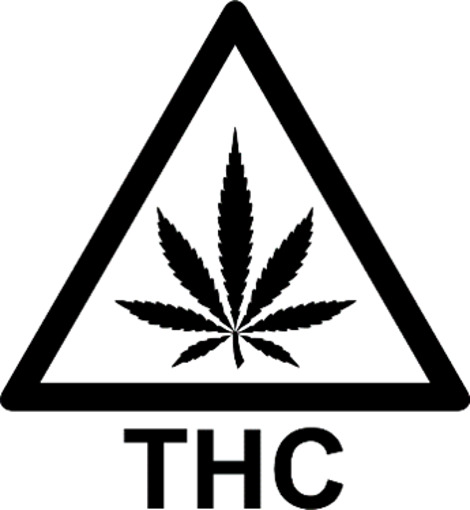
replicate the following International Intoxicating Cannabinoid Product Symbol (IICPS), American Society for Testing and Materials (ASTM) D8441 with the letters THC underneath the IICPS:
B.
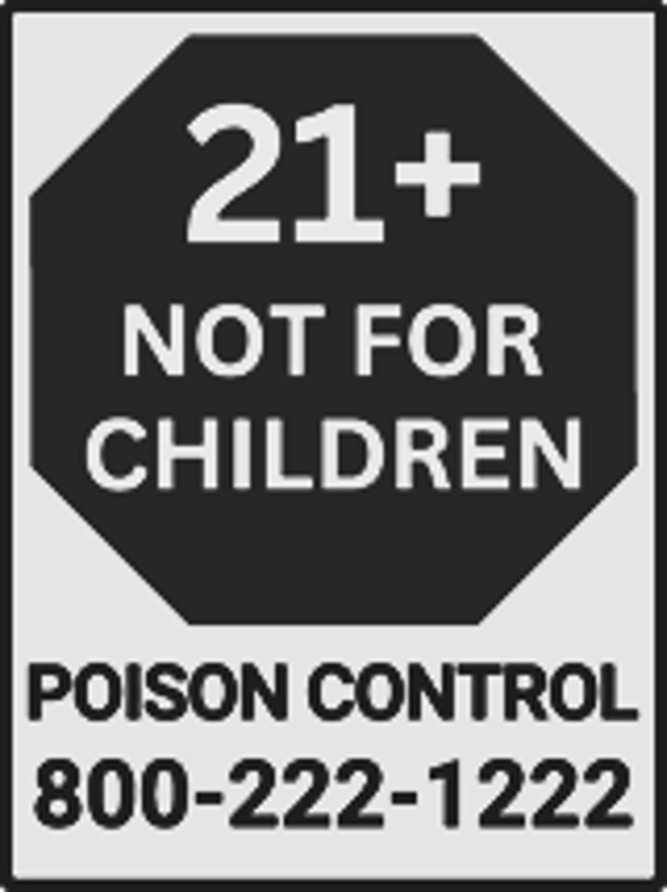
A cannabis business must include a warning symbol on each label. The warning symbol must:
(1)
be no smaller than 0.75 inches tall and 0.6 inches wide and must be printed legibly and conspicuously; and
(2)
replicate the following in form with a yellow background, black text, and a symbol with white text on a red background:
C.
A cannabis business must include a warning statement on each label in no less than size 6 font. The warning statement must state:
"Keep this product out of reach of children. This product may be unlawful outside the state of Minnesota."
Statutory Authority:
MS s 342.02
History:
49 SR 1143
Published Electronically:
April 25, 2025
9810.1401 PACKAGING AND LABELING REQUIREMENTS FOR RETAIL SALE.
Subpart 1.
Labeling requirements applicable to immature cannabis plants and cannabis seedlings.
Immature cannabis plants and seedlings sold to customers or patients must be labeled with:
A.
the name and license number of the cannabis business that cultivated the immature cannabis plants or seedlings;
B.
the weight or volume of the plant or seedlings sold, not including the weight or volume of the package or container;
Subp. 2.
Labeling requirements applicable to dried cannabis flower products.
In addition to the labeling requirements under parts 9810.1400, 9810.1402, and 9810.1403, and Minnesota Statutes, section 342.63, dried cannabis flower product labels must include:
Subp. 3.
Labeling requirements applicable to ingestible cannabis products and lower-potency hemp edibles.
In addition to the labeling requirements under parts 9810.1400, 9810.1402, and 9810.1403, and Minnesota Statutes, section 342.63, ingestible cannabis product and lower-hemp edible product labels must include:
B.
all other ingredients in the product, including excipients, listed in a separate section of the ingredient list in descending order of predominance by weight;
F.
the THC content and CBD content for the package in its entirety, expressed in milligrams per package;
G.
the expiration date when the product is no longer fit for consumption and when the product must be destroyed; and
Subp. 4.
Labeling requirements applicable to cannabis concentrate products.
In addition to the labeling requirements under parts 9810.1400, 9810.1402, and 9810.1403, and Minnesota Statutes, section 342.63, a cannabis concentrate product label must include the following information:
H.
the expiration date when the concentrate product is no longer fit for consumption and when the product must be destroyed; and
Subp. 5.
Labeling requirements applicable to topical products.
In addition to the labeling requirements under parts 9810.1400, 9810.1402, and 9810.1403, and Minnesota Statutes, section 342.63, topical product labels must include the following information:
B.
the name of the independent, accredited laboratory used by the manufacturer to test the product;
E.
the list of all ingredients in the product in descending order of predominance by weight or volume;
Subp. 6.
Labeling requirements applicable to hemp-derived consumer products.
In addition to the labeling requirements under parts 9810.1400, 9810.1402, and 9810.1403, and Minnesota Statutes, section 342.63, hemp-derived consumer products must:
A.
comply with subpart 2 if the product is a hemp-derived consumer product under Minnesota Statutes, section 342.01, subdivision 37, paragraph (a), clause (1); or
B.
comply with subpart 4 if the product is a hemp-derived consumer product under Minnesota Statutes, section 342.01, subdivision 37, paragraph (a), clause (2).
Subp. 7.
Labeling requirements for imported hemp-derived consumer products.
All hemp-derived consumer products imported into the state must be labeled in a manner that provides customers substantially similar information to the requirements applicable to hemp-derived consumer products under this chapter and Minnesota Statutes, section 342.63. In addition, imported hemp-derived consumer products must contain the following information on the label:
Subp. 8.
Labeling requirements for products containing artificially derived cannabinoids.
In addition to the labeling requirements under parts 9810.1400, 9810.1402, and 9810.1403 and Minnesota Statutes, section 342.63, products that contain artificially derived cannabinoids must be labeled with the following statement: "Contains artificially derived cannabinoids. Not all safety hazards have been evaluated."
Statutory Authority:
MS s 342.02
History:
49 SR 1143
Published Electronically:
April 25, 2025
9810.1402 PACKAGING AND LABELING FOR MEDICAL PATIENTS.
Subpart 1.
Universal medical label.
In addition to the labeling requirements under part 9810.1400 and Minnesota Statutes, section 342.63, medical cannabis flower and a medical cannabinoid product must be labeled with a universal symbol indicating that the product was cultivated, manufactured, and packaged for sale to medical patients.
A.
The universal symbol must replicate the following in form with black text on a yellow background:
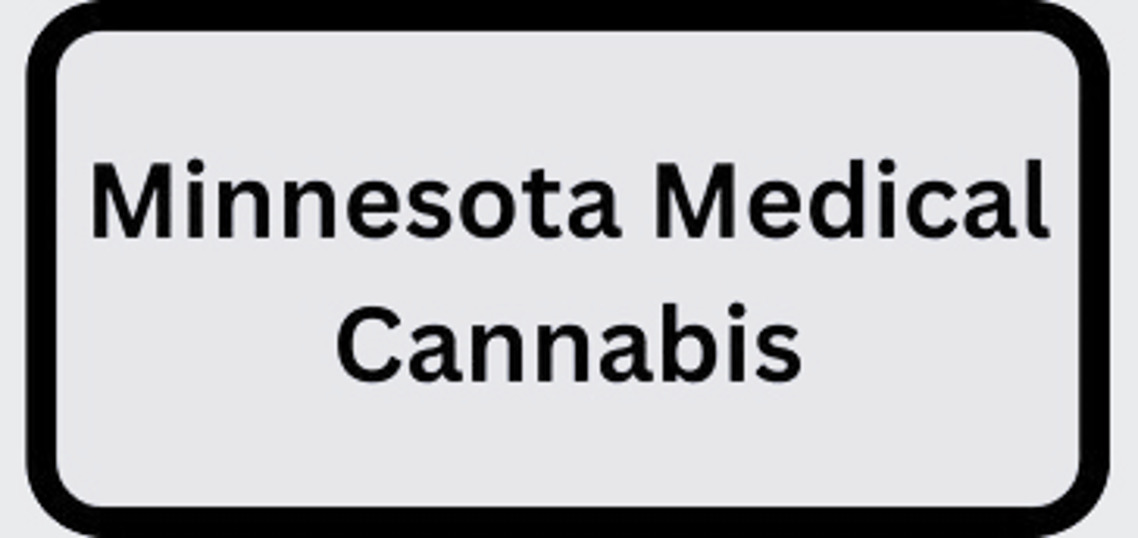
B.
The symbol must be no smaller than 0.5 inches wide by 0.35 inches tall and must be printed legibly and conspicuously.
Subp. 2.
Patient-specific label.
In addition to the information required by Minnesota Statutes, section 342.63, subdivision 4, a medical cannabis combination business or cannabis retailer, microbusiness, or mezzobusiness with a medical cannabis retailer endorsement must include the following information on a patient-specific label affixed to medical cannabis flower or a medical cannabinoid product:
A.
the name and address of the medical cannabis manufacturer that manufactured the medical cannabis flower or medical cannabinoid product;
E.
the statement "This medical cannabis is for therapeutic use only. Diversion of this product is unlawful and may result in revocation of the patient's registration."
Statutory Authority:
MS s 342.02
History:
49 SR 1143
Published Electronically:
April 25, 2025
9810.1403 PACKAGING AND LABELING PROHIBITIONS.
A product regulated under Minnesota Statutes, chapter 342, that is intended for sale in Minnesota must comply with Minnesota Statutes, section 342.62, and must not be labeled, packaged, or presented to a consumer in a manner that:
B.
represents the product as organic unless the cannabis plants and all ingredients used in the product are produced, processed, and certified in a manner that is consistent with the national organic standards established by the United States Department of Agriculture in accordance with the Organic Foods Production Act of 1990, United States Code, title 7, section 6501 et seq.
Statutory Authority:
MS s 342.02
History:
49 SR 1143
Published Electronically:
April 25, 2025
9810.1500 SECURITY.
Subpart 1.
Responsibilities.
B.
A cannabis event organizer must provide security while cannabis clones, cannabis seedlings, cannabis plants, adult-use cannabis flower, adult-use cannabis products, lower-potency hemp edibles, and hemp-derived consumer products are on site at a temporary cannabis event.
Subp. 2.
Required security measures.
A.
Security measures under this part must include:
(5)
an immediate response protocol that must be initiated within 30 minutes after a security event occurs.
B.
A cannabis business may implement additional security features that do not violate local, state, and federal laws.
Subp. 3.
Testing security measures.
A.
A cannabis business must establish a protocol for testing and maintaining security measures required by this part. The protocol for testing and maintaining security measures must include:
(1)
periodic testing and inspection that occurs at least once every 90 days. A cannabis business may fulfill this requirement by contracting with an outside resource capable of meeting testing and inspection needs, such as a security business; and
(2)
prompt repairs as described in this subitem to ensure that the alarm system works properly.
(a)
A cannabis business must complete all repairs of an alarm system within 72 hours after the alarm system's failure. If a business is not able to complete a repair within 72 hours after the alarm system's failure and the alarm system is not able to operate as required by this chapter and Minnesota Statutes, chapter 342, then the business must cease all operations until repairs have been completed.
(b)
If all or part of an alarm system is inoperable due to the need for repair and the business is unable to make the repair within 72 hours after the alarm system's failure, a cannabis business may contact the office to request an extension.
B.
A cannabis business must maintain records of the business's compliance with the protocols for testing and maintaining security measures. A cannabis business must make the compliance records available for inspection by the office upon request.
Subp. 4.
People and resource protection.
A cannabis business must develop, document, implement, and maintain security measures to protect:
Subp. 5.
Theft and diversion.
A cannabis business must develop, document, implement, and maintain effective security measures to guard against:
A.
the theft of cannabis clones, cannabis plants, cannabis seedlings, cannabis flower, cannabis products, artificially derived cannabinoids, hemp plant parts, hemp concentrate, lower-potency hemp edibles, hemp-derived consumer products, or currency; and
B.
the diversion of cannabis clones, cannabis plants, cannabis seedlings, cannabis flower, cannabis products, artificially derived cannabinoids, hemp plant parts, hemp concentrate, lower-potency hemp edibles, hemp-derived consumer products, or currency.
Subp. 6.
Worker access.
All cannabis workers must have an employment identification badge issued by the cannabis business. The badge must display a visual coding system indicating the activities that the worker may perform and which areas of the premises that the worker may access. Employment identification badges must always be visibly displayed on each worker's person when the worker is conducting activities on behalf of the cannabis business. A cannabis business must post signage, not less than 12 inches in height and not less than 12 inches in width at all points of access to areas containing cannabis stating "Do Not Enter - Access Limited to Authorized Employees Only" in lettering no smaller than one inch in height.
Subp. 7.
Unauthorized access.
A cannabis business must develop, document, implement, and maintain security measures to guard against unauthorized access to:
B.
motor vehicles used in the transport or delivery of cannabis clones, cannabis plants, cannabis seedlings, cannabis flower, cannabis products, artificially derived cannabinoids, hemp plant parts, hemp concentrate, lower-potency hemp edibles, and hemp-derived consumer products;
Subp. 8.
Alarm requirements.
A.
A cannabis business must install, operate, and maintain in good working order a security alarm system on the business's premises. The alarm system must be active 24 hours per day, seven days per week. The alarm system must be monitored by a contracted security company or a cannabis worker employed by the cannabis business. The alarm system must provide the cannabis business with:
(1)
immediate alerts to authorized personnel and local law enforcement of an unauthorized breach of the cannabis business's premises or an alarm system failure;
(2)
immediate alerts to authorized personnel and local emergency services of any hazardous conditions detected on the business's premises;
(3)
a back-up alarm system that activates immediately and automatically upon the loss of electricity and alerts authorized personnel of the loss of electricity;
(4)
an audible alarm capable of being heard by an individual within a 100-foot radius from entrances and exits of the premises; and
B.
A cannabis business must promptly notify local law enforcement and the office in the event of an alarm system failure that is expected to last longer than eight hours and must implement alternative security measures according to the security plan required under Minnesota Statutes, section 342.14, subdivision 1, paragraph (a), clause (6).
C.
If no alternative security measure is in place or an alternative security measure fails, a cannabis business must not continue operations until either the primary or alternative security system is operational.
Subp. 9.
Video surveillance requirements.
A.
A cannabis business must maintain video surveillance of all premises associated with the business's license. A cannabis business must ensure that video surveillance is active during the entirety of any temporary cannabis event.
B.
Video surveillance must be active 24 hours per day, seven days per week, on the premises of a cannabis business.
C.
Video surveillance must consist of video cameras that are:
(1)
placed in locations that allow the cameras to clearly record activity occurring within a radius of at least 20 feet from all points of entry and exit;
(2)
affixed to the exterior and interior of the cannabis business's premises to identify individuals entering and exiting the premises, limited-access areas, and restricted-access areas; and
(3)
at temporary cannabis events, mounted in a manner to record activity occurring in the area accessible to the public, including any designated retail areas, and points of entry and exit.
D.
Video cameras must monitor each entry and exit point of the perimeter, limited-access areas, and restricted-access areas of a cannabis business's premises. Video cameras must be permanently placed around the cannabis business's premises to allow the viewing, in its entirety, of any areas where:
(7)
cannabis is collected as samples for mandatory testing and prepared and sealed for transport to a cannabis testing facility; and
E.
Video cameras must have:
(1)
video files produced by the video surveillance system that the cannabis business stores in a secure place for a minimum of 90 days;
Subp. 10.
Lighting.
A cannabis business must maintain all lighting in good working order inside and outside the business's premises and any temporary cannabis event. Lighting must deter nuisance and criminal activity by allowing observers to see and cameras to record any activity within a radius of at least 20 feet around all entrances and exits. A cannabis business must ensure that exterior lighting does not disturb surrounding businesses or neighbors by adjusting the lumens or radius of exterior lighting to only illuminate the areas described in this part. A cannabis business must repair any deficient or inoperable lighting within 48 hours of detecting the deficiency or inoperability of the lighting.
Subp. 11.
Motion sensors.
A cannabis business may install motion sensors on the cannabis business's premises to:
Subp. 12.
Locks.
A cannabis business must ensure that all external entrances to indoor facilities and perimeter windows on the business's premises are in good condition and can be locked. A cannabis business must ensure that all doors, windows, gates, and fences have commercial-grade locks. All perimeter entry doors must have electronic locks and keypads.
Subp. 13.
Access to restricted areas.
An individual must meet the requirements under Minnesota Statutes, section 342.24, subdivision 3, to enter a restricted area of a cannabis business's premises. A cannabis business must maintain a record of the names of individuals who enter restricted areas for at least three years. A cannabis business must make the records available to the office upon request.
Subp. 14.
Fencing.
Unless required under this chapter or Minnesota Statutes, chapter 342, a cannabis business may erect a commercial-grade fence around the perimeter of the cannabis business's premises. Fencing on a cannabis business's premises must meet the requirements of local law.
Subp. 15.
Outdoor cultivation areas.
A cannabis business must ensure that an outdoor cultivation area is enclosed by fencing and locked gates to prevent access to the area by unauthorized persons. A cannabis business must ensure that all fencing and gates are secure, are at least six feet high, and obscure or have a cover that obscures the fenced area from being readily viewed from outside the fenced area. A cannabis business must ensure that fencing around an outdoor cultivation area on the business's premises is commercial or security grade, is not agricultural or residential grade, and is designed to prevent access to the cultivation area by unauthorized persons.
Subp. 16.
Security personnel.
Except when required under Minnesota Statutes, section 342.40, a cannabis business may employ or contract with security guards, as defined under Minnesota Statutes, section 326.32, subdivision 13. A security guard for a cannabis business must be at least 21 years of age or older and meet the training requirements in Minnesota Statutes, section 326.3361.
Subp. 17.
Transportation security requirements.
A.
This subpart applies to persons and businesses engaged in the transport or delivery of cannabis.
B.
A cannabis business must ensure that each transport and delivery vehicle:
(1)
is equipped with a storage compartment that complies with Minnesota Statutes, section 342.36, subdivision 3, or 342.42, subdivision 5, as applicable;
(2)
is equipped with a global positioning system (GPS) device for identifying the geographic location of the vehicle at all times when the vehicle is in operation, regardless of whether the vehicle's engine is running, either permanently or temporarily affixed to the vehicle while the vehicle is in operation. GPS data identifying the geographic location of the vehicle must be saved and maintained for at least 30 days. A cannabis business must make GPS data of all cannabis transportation vehicles and cannabis delivery vehicles available for inspection by the office upon request;
(3)
is equipped with functioning heating and air conditioning systems that maintain appropriate temperatures for properly storing cannabis;
(4)
carries the appropriate amount of insurance as required by the Department of Transportation, Department of Commerce, and applicable federal regulations; and
(5) is equipped with a secure form of communication for a cannabis worker's use, such as a mobile phone, at all times when transporting or delivering regulated products.
C.
A cannabis worker must:
(1)
possess a cannabis business identification card and the worker's own valid nonprobationary driver's license appropriate for the type of delivery vehicle driven at all times while transporting or delivering cannabis and must present the identification card and valid driver's license to the office or law enforcement officials upon request;
(2)
not leave cannabis clones, cannabis plants, cannabis seedlings, cannabis flower, cannabis products, artificially derived cannabinoids, hemp plant parts, hemp concentrate, lower-potency hemp edibles, or hemp-derived consumer products in an unattended vehicle; and
(3)
not leave cannabis in a vehicle overnight or outside the operating hours of the cannabis business conducting the transportation or delivery of cannabis.
Statutory Authority:
MS s 342.02
History:
49 SR 1143
Published Electronically:
April 25, 2025
9810.2000 CULTIVATION.
Subpart 1.
Applicability.
To cultivate cannabis for a commercial purpose, a person must have a license issued under Minnesota Statutes, chapter 342, which authorizes cultivation. This part does not apply to the cultivation of cannabis solely for personal use as allowed under Minnesota Statutes, section 342.09, or by a caregiver on behalf of a patient as allowed under Minnesota Statutes, section 342.52.
Subp. 2.
Authorized activities.
B.
A cannabis cultivator may conduct only the activities approved by the office in the cannabis cultivator's submitted cultivation plan.
C.
A cannabis cultivator must notify the office of any changes to the cultivator's cultivation plan at least ten business days before implementing the change. A cannabis cultivator must describe a change to the cultivator's cultivation plan on forms approved by the office that the cultivator submits with all applicable fees pursuant to Minnesota Statutes, chapter 342.
Subp. 3.
Cultivation plan requirements.
A.
A cannabis cultivator must indicate in the cultivator's cultivation plan whether the cultivator plans to cultivate cannabis indoors or outdoors. In addition to application and business plan requirements in Minnesota Statutes, sections 342.14 and 342.25, a cultivation plan for indoor or outdoor cultivation must include information describing:
(1)
the proposed size and layout of the facility areas that the cultivator will use exclusively for cultivation, including a diagram indicating the total canopy;
(3)
plans for providing electricity, water, and other utilities necessary for the normal operation of any cultivation activities;
(5)
plans for recycling any supplies or environmental inputs for cultivation, including water and packaging materials;
(6)
a pest management protocol that incorporates integrated pest management principles as defined in Minnesota Statutes, section 17.114, subdivision 2, paragraph (b), to control or prevent the introduction of pests to the cultivation site;
(7)
the vendor name, vendor contact information, and invoices for all products intended for propagation, including propagative material such as seeds and clones, fertilizers, nutrients, and pest control products that are chemical or biological;
(8)
procedures for operational record keeping to accurately identify all crop inputs that the cultivator will enter into the statewide monitoring system and declare for laboratory testing, regulatory review, and inspection;
(10)
growing schedules that include each seeding date, planting date, or cutting and propagation cycle date, as applicable;
Subp. 4.
Canopy.
A cultivator's total canopy is determined as follows.
A.
For indoor cultivation, the canopy is measured by calculating the total square footage of each distinct cultivation area containing mature, flowering cannabis plants. Distinct cultivation areas include trays, tables, and shelves or may be demarcated by trellising, tiers, or other identifiable boundaries.
B.
For outdoor mixed-light facilities, outdoor mixed-light cultivation may occur in a greenhouse or hoophouse. The canopy acreage is the total area of the outdoor mixed-light facility containing mature, flowering cannabis plants minus any clearly demarcated walkways.
C.
The canopy acreage for cultivation occurring completely outdoors is the total area of the field containing mature, flowering cannabis plants minus any vehicle access roads and completely fallow areas where no cultivation is occurring.
Subp. 5.
Compliance-related activities and access.
A.
A cannabis cultivator must provide the office with access to:
(2)
all land, buildings, and other structures that the cultivator uses for cultivating, handling, producing, and storing cannabis plants;
(3)
all locations identified in the cannabis cultivator's license application, business plan, and cultivation plan; and
(4)
all records related to the production and propagation of cannabis plants, including trimming, culling, pest scouting and control, sampling, and testing reports.
B.
A cannabis cultivator must allow the office to collect cannabis plant and cannabis flower for material laboratory analysis to establish whether the cultivator is in compliance with this chapter and Minnesota Statutes, chapter 342. A cannabis cultivator must provide the office with cannabis plants and cannabis flower for this purpose at no cost.
Subp. 6.
Restrictions.
A.
A cannabis cultivator must not plant, propagate, harvest, or store cannabis plants in an area that is not identified in the cultivation plan or at a site that is not approved by the office to cultivate cannabis.
B.
The total area in square feet in which cannabis plants are cultivated must never exceed the total area for which the cannabis cultivator is approved by the office.
Subp. 7.
Prohibited sales.
A cannabis cultivator must not sell any propagative cannabis material resulting from cannabis cultivation activities to a buyer if the cannabis cultivator knows or should reasonably know that the buyer would use the material to engage in activities prohibited by Minnesota Statutes, chapter 342, or applicable local or state law.
Subp. 8.
Cannabis cultivation premises; requirements.
A.
A cannabis cultivator must ensure that growing, drying, processing, and storing cannabis plants and cannabis flower does not occur in dwellings unless the activity is specifically authorized under Minnesota Statutes, section 342.09. A cannabis cultivator must ensure that all activities approved by the office occur in an area of the cultivator's premises that can be accessed without passing through a dwelling.
B.
A cannabis cultivator must ensure that the premises regulated under this subpart comply with all security requirements described in part 9810.1500.
C.
A cannabis cultivator must ensure that all electrical equipment, including growing lights, cultivation equipment, and packaging equipment, are evaluated and approved for applicable use by an organization recognized by the Occupational Safety and Health Administration's Nationally Recognized Testing Laboratory Program.
D.
A cannabis cultivator must configure each production area to allow authorized individuals to have unobstructed access to, observation of, and the ability to conduct an inventory of all plant canopy.
E.
A cannabis cultivator must ensure that all cultivation activities take place in an area that complies with part 9810.1500.
F.
When selling cannabis directly to consumers on the premises where cultivation is authorized by the office, a cannabis cultivator must ensure that a wall or another barrier with proper security measures is in place to separate customer areas of the premises from limited-access areas, including any area where the cultivator collects, packages, and seals cannabis samples for mandatory testing for transport to a cannabis testing facility.
Subp. 9.
Sources of plants and seeds.
A.
After December 1, 2025, a cannabis cultivator must obtain cannabis seeds, immature cannabis plants, cannabis mother plants, cannabis plants, and other cannabis plant sources intended for propagation from a source authorized by the office to sell those products.
Subp. 10.
Plant identification and reporting.
A cannabis cultivator must label each cannabis plant with the plant's batch number according to part 9810.1302.
Subp. 11.
Crop inputs.
A.
A cannabis cultivator must ensure that crop inputs:
(1)
are handled and applied in a manner that prevents the contamination of cannabis plants with filth, residues, or other substances that would likely render products of the cannabis plant injurious to human health;
(3)
are stored in the original containers with the original labels intact or in working containers of diluted or prepared applications labeled with information required by Minnesota Statutes, chapters 18B, 18C, and 18D, and other applicable laws; and
B.
A cannabis cultivator must ensure that all crop inputs, rinsate, and containers are diluted, applied, stored, and disposed of according to label instructions and in compliance with all applicable laws and regulations.
Subp. 12.
Sanitary practices.
The following sanitary practices apply to all cannabis cultivation activities, including harvesting, drying, curing, and storage.
A.
A cannabis cultivator must conduct cultivation in a manner to limit the exposure of immature cannabis plants and cannabis plants to conditions that would likely render the products of the cannabis plants injurious to human health.
B.
A cannabis cultivator must handle a harvested cannabis plant product intended for human consumption at temperatures and in environmental conditions that protect the product from physical, chemical, and microbial contamination and deterioration of the product as it is described on the product's labeling.
C.
A cannabis cultivator must ensure that utensils and equipment, including storage containers, that come into direct contact with harvested product are cleanable, constructed of materials that will not transfer to the harvested product, and maintained in good condition to prevent contamination of the harvested product.
D.
A cannabis cultivator must store and handle packaging materials that come into direct contact with the harvested product in a manner to prevent contamination from the environment. A cannabis cultivator must:
(1)
clean packing materials between uses if the materials are designed to be cleaned and used multiple times; or
Subp. 13.
Record keeping.
A.
A cannabis cultivator must keep and maintain records of the cultivator's cultivation activities in the statewide monitoring system according to parts 9810.1300 to 9810.1302. At a minimum, a cannabis cultivator must document:
(2)
the application of crop inputs to the growing medium, plants, or plant material used in production according to item D;
(3)
a description of plant maintenance, including dates, that involves culling plant parts or plant disposal; and
B.
A cannabis cultivator must include the following information in the cultivator's records:
(2)
the name of the worker conducting cultivation or the name of the responsible worker when there is more than one worker conducting cultivation;
(3)
the name and description of the specific cultivation activity under Minnesota Statutes, section 342.01, subdivision 27, that the worker performed;
C.
A cannabis cultivator must include the following information in the cultivator's records for the initiation of cultivation:
D.
A cannabis cultivator must include the following information in the cultivator's records for crop inputs:
Subp. 14.
Medical and adult-use cannabis cultivation.
A license holder that is endorsed or authorized by the office to cultivate both medical cannabis and adult-use cannabis must comply with this subpart to cultivate medical and adult-use cannabis on the same premises.
A.
A cannabis business may cultivate both medical cannabis and adult-use cannabis only if:
(1)
the business's cultivation plan submitted under subpart 2 addresses both medical cannabis and adult-use cannabis; and
B.
If a cannabis business is cultivating both medical cannabis and adult-use cannabis on the same premises, the cannabis business must:
(1)
cultivate medical cannabis in an area separated from the area used to cultivate adult-use cannabis;
(4)
ensure that medical cannabis is never cultivated simultaneously with adult-use cannabis on the same piece of equipment; and
(5)
keep a log for each piece of equipment that the facility uses to cultivate both medical cannabis and adult-use cannabis. The cannabis business must make the log available to the office upon request. The log must contain:
(b)
the tracking information for the cannabis or cannabis concentrate that was processed using the equipment;
Statutory Authority:
MS s 342.02
History:
49 SR 1143
Published Electronically:
April 25, 2025
9810.2100 APPROVED PRODUCT CATEGORIES AND CANNABINOIDS.
Subpart 1.
Cannabis flower and cannabis products.
The following product categories, including products manufactured by changing the physical shape or texture of these products, are approved for sale in Minnesota to both adult-use customers and medical registry participants.
D.
Cannabis combination products contain both dried cannabis flower products and cannabis concentrate products. The following product categories are approved cannabis combination products:
E.
Transdermal or topical cannabis products intended only for application to external parts of the body.
Subp. 2.
Lower-potency hemp edible products.
Lower-potency hemp edibles are defined in Minnesota Statutes, section 342.01, subdivision 50. The following product categories are approved lower-potency hemp edible products:
Subp. 3.
Hemp-derived consumer products.
The following are approved hemp-derived consumer products:
B.
hemp-derived oils intended to be consumed by combustion or vaporization of the product and inhalation of smoke, aerosol, or vapor from the product.
Statutory Authority:
MS s 342.02
History:
49 SR 1143
Published Electronically:
April 25, 2025
9810.2101 PRODUCTION AND POTENCY LIMITS.
Subpart 1.
Cannabis manufacturing production limits.
On an annual basis, the following license holders may not use more than the following volume of cannabis or its dry-weight equivalent of raw concentrates to manufacture regulated products:
C.
medical combination business: 90,000 pounds, of which at least two-thirds must be used for the medical market.
Statutory Authority:
MS s 342.02
History:
49 SR 1143
Published Electronically:
April 25, 2025
9810.2102 MANUFACTURING.
Subpart 1.
Authorized activities.
A.
A cannabis business must have the office's approval before manufacturing regulated products. To obtain the office's approval to manufacture regulated products, a cannabis business must submit a manufacturing plan to the office for:
B.
A cannabis business may conduct only the manufacturing activities in the operator's manufacturing plan approved by the office.
C.
A cannabis business must notify the office of any changes to the manufacturing plan at least ten business days before implementing the change. A cannabis business must describe the change to the manufacturing plan on forms approved by the office and pay all applicable fees pursuant to Minnesota Statutes, chapter 342. If the change to the manufacturing plan includes relocating the licensed manufacturing facility, a cannabis business must pay additional fees pursuant to Minnesota Statutes, section 342.12, at the time that the cannabis business submits the change to the office.
Subp. 2.
Manufacturing plan requirements.
A.
In addition to application and business plan requirements in Minnesota Statutes, sections 342.14 and 342.25, a manufacturing plan must include information describing:
(2)
the proposed size and layout of the facility areas that the cannabis business will use exclusively for manufacturing, including a diagram indicating the placement of equipment;
(4)
plans for providing electricity, water, and other utilities necessary for manufacturing activities;
(6)
plans for recycling supplies, inputs, ingredients, and work-in-progress for manufacturing, including water and packaging materials;
(7)
a pest management protocol to control or prevent the introduction of pests to the manufacturing site;
(8)
the sources of all ingredients and inputs that the cannabis business intends to use in the manufacturing process;
(9)
all processing steps that the cannabis business will take, including all potential product-related biological, chemical, and physical hazards that may occur during each step and the business's planned actions to control the identified hazards;
(10)
standard operating procedures for sanitary handling of ingredients, in-process product, finished products, and packaging materials;
(11)
a description of batch numbering and plant identifier control systems that the cannabis business will use;
(12)
methods for securing inputs and ingredients regulated under Minnesota Statutes, chapter 342, and in-process products after the addition of the inputs and ingredients; and
(13)
procedures for keeping records of each batch that accurately identify all inputs, processes, and waste that the cannabis business must enter into the statewide monitoring system and declare for laboratory testing, regulatory review, and inspection.
Subp. 3.
Compliance-related activities and access.
A.
A cannabis business must provide the office access to:
(1)
all areas where the cannabis business receives, handles, processes, stores, and ships regulated products;
(2)
all land, buildings, and other structures that the cannabis business uses for manufacturing and storing regulated products;
(3)
all technical specifications for products, processes, and equipment that the cannabis business uses in the production of regulated products; and
(4)
all of the cannabis business's records related to the production of regulated products, including all analysis and testing requests and reports.
B.
A cannabis business must allow the office to collect inputs, ingredients, in-process products, packaging, and finished products for laboratory analysis to establish whether the business is in compliance with this chapter and Minnesota Statutes, chapter 342. A cannabis business must provide items collected for this purpose to the office at no cost.
Subp. 4.
Restrictions.
A.
A cannabis business must not conduct manufacturing in an area that is not identified in the manufacturing plan or at a site that is not approved by the office to manufacture regulated products.
Subp. 5.
Prohibited sales.
A cannabis business must not sell any cannabinoid product resulting from cannabis manufacturing to a buyer if the cannabis business knows or should reasonably know that the buyer would be engaging in prohibited activities under Minnesota Statutes, chapter 342, or applicable local or state law with the obtained cannabinoid plant product.
Subp. 6.
Cannabis manufacturing premises requirements.
A.
Manufacturing must take place in a facility that meets the applicable requirements of Minnesota Statutes, section 342.26. A manufacturing facility must:
(1)
have adequate physical space for all manufacturing, including storage, in a fully enclosed and secured indoor facility according to part 9810.1104;
(2)
be supplied with electrical service, water service, sewer service or treatment, and other utilities necessary for operations approved by the office;
(3)
have ventilation and air-handling systems with temperature and humidity controls that are adequate for safe processing and sanitary operations;
(4)
be supplied with lighting fixtures that are adequate to perform manufacturing and sanitation functions in a safe and sanitary manner;
(5)
have floors, walls, and ceilings in the manufacturing area that are constructed with surfaces that can be easily cleaned and maintained in good repair to inhibit microbial growth; and
(6)
have hand-washing facilities located in all manufacturing areas where unpackaged product is handled.
B.
If a cannabis business sells regulated products to consumers on the premises where manufacturing is authorized by the office, the cannabis business must ensure that a fence or other adequate security measure is in place to separate customer areas of the premises from limited-access areas, including any area where samples for mandatory testing are collected, packaged, and sealed for transport to a cannabis testing facility.
C.
A facility that manufactures dried cannabis flower must follow additional requirements under part 9810.2203.
Subp. 7.
Sources of ingredients from cannabis and hemp.
A.
All regulated products that are used in the manufacturing process must be purchased, acquired, or received from a cannabis business permitted to distribute regulated products or from a Minnesota Tribally licensed cannabis business.
B.
Hemp-derived ingredients must:
(1)
be sourced from compliant hemp grown under the authority of a federally compliant hemp program; or
(2)
be purchased, acquired, and received from a cannabis business permitted to distribute hemp-derived products regulated by the office or from a Minnesota Tribally licensed cannabis business.
Subp. 8.
Batch identification and reporting.
Each plant used in manufacturing must be labeled with a batch number according to part 9810.1302.
Subp. 9.
Manufacturing inputs and ingredients.
A.
All products other than cannabis-derived ingredients and hemp-derived ingredients must be:
(1)
safe for the intended purpose and use in the manufacturing process. Any solvent used in manufacturing must be safe for human consumption and approved for use in foods by the federal Food and Drug Administration;
(2)
handled and used in a manner that prevents contamination with filth, residues, or other substances that would likely render products of the cannabis plant injurious to human health;
(3)
in conformance with applicable sections of Minnesota Statutes, chapters 18B, 18C, and 18D, and other applicable laws; and
(4)
stored in original containers with original labels intact or in working containers of diluted or prepared applications labeled with information required by Minnesota Statutes, chapters 18B, 18C, and 18D, and other applicable laws.
B.
All manufacturing inputs, ingredients, and containers must be used, stored, and disposed of according to label instructions and in compliance with all other applicable laws and regulations.
Subp. 10.
Sanitary practices.
A.
A cannabis business must follow sanitary practices during all manufacturing, including receiving, storing, processing, handling, packaging, and labeling regulated products. At a minimum, a cannabis business's sanitary practices must:
(1)
ensure that an individual who has a communicable disease or other illness does not perform any tasks that might contaminate regulated products;
(2)
ensure that hand-washing facilities in manufacturing areas are supplied with:
(c)
sanitary drying functions, such as electronic drying devices, single-use towels, or a sanitary towel service;
(3)
ensure that a worker who comes into direct contact with regulated products uses hygienic practices, including maintaining the cleanliness of the worker's outer garments and washing hands thoroughly in a hand-washing area before starting work and at any other time when the worker's hands may have become soiled or contaminated;
(4)
control environmental conditions and ensure that workers use sanitary handling practices to protect products against physical, chemical, and microbial contamination and store products in a manner to prevent the growth of microorganisms;
(5)
control environmental conditions to prevent the deterioration of products or contents that are described on the products' labeling;
(6)
ensure that tools, utensils, and equipment, including storage containers, that come into direct contact with ingredients, in-process products, and finished products are cleanable and constructed from materials that will not transfer to ingredients or finished products; and
(7)
ensure that all product-contact surfaces, utensils, and equipment are cleaned before being used to manufacture products and are maintained in a condition that prevents contamination of ingredients or regulated products.
B.
Packaging materials that come into direct contact with ingredients, in-process products, or finished products must be:
(2)
stored and handled in a manner to prevent contamination of materials from the environment; and
(3)
cleaned between uses if designed for cleaning and multiple uses or discarded after single use.
C.
A cannabis business must make efforts to prevent pests by:
(2)
promptly disposing of waste to minimize odors and the potential for waste to attract, harbor, or become a breeding place for pests.
D.
A cannabis business must store toxic cleaning compounds, sanitizing agents, and other potentially harmful chemicals in a separate location away from regulated products and in accordance with applicable local, state, and federal workplace safety requirements.
Subp. 11.
Record keeping.
A.
A cannabis business must keep records of each batch of manufactured products. A cannabis business must enter manufacturing and batch information in the statewide monitoring system as required by parts 9810.1400 to 9810.1402.
Subp. 12.
Medical cannabinoid product and adult-use cannabis product manufacturing.
A license holder that is endorsed or authorized by the office to manufacture both medical cannabinoid products and adult-use cannabis products must comply with this subpart to manufacture medical cannabis and adult-use cannabis products on the premises of the same facility.
A.
A cannabis business's manufacturing facility may manufacture both medical cannabis and adult-use cannabis products on the premises of the same facility if:
(1)
the cannabis business's manufacturing plan indicates that the cannabis business will manufacture both medical cannabis and adult-use cannabis products on the premises of the same facility;
B.
If a cannabis business is manufacturing both medical cannabis and adult-use cannabis on the premises of the same facility, the facility must:
(3)
ensure that medical cannabis is not manufactured simultaneously or contemporaneously with adult-use cannabis on the same piece of equipment; and
(4)
update and maintain records for each piece of equipment that the facility uses to manufacture both medical cannabis and adult-use cannabis. A cannabis business must make the records available to the office upon request. The records must contain:
(b)
tracking information for the cannabis or cannabis concentrate that was processed using the equipment;
Statutory Authority:
MS s 342.02
History:
49 SR 1143
Published Electronically:
April 25, 2025
9810.2203 DRIED CANNABIS FLOWER PRODUCT; MANUFACTURING REQUIREMENTS.
Subpart 1.
Authorized activity.
A manufacturer may manufacture dried cannabis flower products into saleable cannabis products.
Subp. 2.
Labeling.
A manufacturer may sell multiple uniform dried cannabis flower products to another cannabis business under a single label so long as the label reflects the number of units or weight of the product being sold.
Subp. 3.
Infused smokeable products.
A manufacturer with an endorsement to produce cannabis or hemp concentrate may manufacture dried cannabis flower products combined with cannabis concentrate, except an infused dry cannabis flower product must not be infused with any product other than a cannabis-derived product.
Statutory Authority:
MS s 342.02
History:
49 SR 1143
Published Electronically:
April 25, 2025
9810.2204 INGESTIBLE CANNABIS PRODUCT; MANUFACTURING REQUIREMENTS.
Subpart 1.
Authorized activity.
A manufacturer may only produce ingestible cannabis products or lower-potency hemp-derived edibles if the manufacturer has a license or a product handler endorsement for producing ingestible cannabis products or lower-potency hemp-derived edibles under Minnesota Statutes, chapter 342.
Subp. 2.
Minnesota food laws.
A manufacturer must manufacture ingestible cannabis products and lower-potency hemp-derived edibles in accordance with Minnesota Food Law, including applicable sections of Code of Federal Regulations that are adopted by reference in Minnesota Statutes, section 31.101, except that a product is not adulterated solely due to the presence of cannabis or hemp ingredients.
Subp. 3.
Homogenous products.
An ingestible cannabis product or a lower-potency hemp edible manufacturer must use production methods that result in a finished product batch with consistent servings and consistent packages, prepared in a manner to ensure that each individual serving has a consistent amount of cannabinoid ingredients pursuant to part 9810.3100. At a minimum, a manufacturer must:
A.
develop stable product formulations that consider and address specific ingredients and the nature of the finished product;
B.
establish written procedures for preparing edible cannabis products or lower-potency hemp edibles specific to the manufacturing site; and
C.
maintain batch records that demonstrate the manufacturer's compliance with product formulations and the manufacturer's written procedures.
Statutory Authority:
MS s 342.02
History:
49 SR 1143
Published Electronically:
April 25, 2025
9810.2205 CANNABIS AND HEMP CONCENTRATE; MANUFACTURING REQUIREMENTS.
Subpart 1.
Facilities.
Cannabis or hemp extraction and concentration systems must be designed to effectively and consistently function, operate safely, and provide sanitary production conditions. A cannabis or hemp manufacturer must have the manufacturer's electrical, gas, fire suppression, and exhaust systems and storage and disposal plans for hazardous substances certified by an industrial hygienist or a professional engineer qualified to conduct the certification through education, experience, or professional credentialing.
A.
A certifying individual must include the individual's qualifications in writing as part of a facility's record of certification.
B.
The certification of a facility must include an assessment of:
(2)
the facility's plan for safe storage and disposal of hazardous substances, including any volatile chemicals.
C.
A facility's certification must be completed by a certifying individual, documented, and approved by the office before the facility manufactures any product intended for sale or distribution.
Subp. 2.
Inactive ingredients.
A cannabis business may use cannabis-derived ingredients to manufacture cannabis concentrate or hemp-derived concentrate. A cannabis business may use only non-cannabis-derived inactive ingredients listed in the federal Food and Drug Administration inactive ingredient database to manufacture cannabis concentrate or hemp-derived concentrate that is intended for use through a vaporizer delivery device or pressurized metered dose inhaler.
Subp. 3.
Prohibited ingredients.
When manufacturing cannabis concentrate, a manufacturer must ensure that:
A.
any concentrate used to create a solution for vaporization or inhalation is 100 percent naturally occurring plant-derived terpene oil;
Subp. 4.
Requirements for manufacturers of artificially derived cannabinoid products.
An artificially derived cannabinoid product must not contain any artificially derived cannabinoids other than delta-9 tetrahydrocannabinol, except that a product may include artificially derived cannabinoids created during the process of creating delta-9 tetrahydrocannabinol that is added to the product, if no artificially derived cannabinoid is added to the ingredient containing delta-9 tetrahydrocannabinol and the ratio of delta-9 tetrahydrocannabinol to all other artificially derived cannabinoids is no less than 20 to one. An artificially derived cannabinoid product may contain nonpsychoactive naturally occurring cannabinoids, such as cannabidiol, cannabigerol, cannabinol, or cannabichromene.
Statutory Authority:
MS s 342.02
History:
49 SR 1143
Published Electronically:
April 25, 2025
9810.2300 TRANSPORTATION.
Subpart 1.
Applicability.
A cannabis business holding a valid transporter license must establish a standard operating procedure to ensure compliance with this chapter and Minnesota Statutes, chapters 221 and 342. A cannabis business holding a valid transporter license must comply with all commercial vehicle requirements imposed by the Department of Public Safety, the Department of Commerce, and the Department of Revenue.
Subp. 2.
Covered products.
A cannabis transporter must comply with this part when transporting regulated products.
Subp. 3.
Shipping manifest.
A.
Before accepting regulated products from a cannabis business, a cannabis transporter must obtain a shipping manifest. A cannabis transporter must produce a shipping manifest using the statewide monitoring system. A shipping manifest must include:
(5)
the name of each employee or contractor of the cannabis transporter who will participate in the transportation of the products;
B.
A copy of the shipping manifest must accompany the products until the products are delivered. The shipping manifest must be available for inspection by the office at any time during transportation. A cannabis transporter may provide the office with a shipping manifest in digital or physical form.
Subp. 4.
Motor vehicle registration.
Motor vehicles used for cannabis transport and regulated under this part must be registered in the state of Minnesota.
Subp. 5.
GPS tracking.
A cannabis delivery vehicle must be equipped with an active global positioning system or other similar satellite-based tracking system.
Subp. 6.
Product secured during transportation.
A.
During transportation, all regulated products must be stored in either a locked compartment of a cannabis delivery vehicle or a locked container inside a cannabis delivery vehicle.
B.
The entire cargo bay, cargo area, or trunk of a cannabis transportation vehicle may be used for holding products if:
(1)
the cargo bay, cargo area, or trunk is protected by a locking mechanism with a lock or keypad separate from vehicle door locks;
(2)
the cargo bay, cargo area, or trunk is inaccessible from the driver and passenger areas of the cannabis delivery vehicle; and
(3)
products stored in the cargo bay, cargo area, or trunk are not visible from outside the cannabis delivery vehicle.
C.
A cannabis transporter may use a container that is not integral to the cannabis delivery vehicle for holding regulated products if:
Subp. 7.
Identifying logos and business names.
A cannabis transportation vehicle or cannabis delivery vehicle must not contain images prohibited by Minnesota Statutes, section 342.36, and must comply with Minnesota Statutes, section 221.031, subdivision 6, and Code of Federal Regulations, title 49, section 390.21.
Subp. 8.
Transportation routes.
A.
A cannabis transporter must make reasonable efforts to ensure that driving routes and delivery times are randomized. At a minimum, the same individual must not, on a reoccurring scheduled basis:
B.
A cannabis transporter must not deviate unnecessarily from a planned route or schedule. A cannabis transporter must include the following information in the shipping manifest and record this information in the statewide monitoring system:
(1)
any necessary stops that the vehicle makes, other than stops made in compliance with traffic laws;
Subp. 9.
Vehicle occupants.
A cannabis delivery vehicle that is transporting regulated products must be staffed by at least two individuals, and at least one individual must remain with the vehicle at all times. All occupants of a cannabis delivery vehicle must be cannabis workers employed by or contracted with the cannabis transporter who:
B.
must carry a valid driver's license with proper endorsements while operating a cannabis delivery vehicle.
Subp. 10.
Inspection.
All vehicles used by a cannabis business for transporting regulated products must comply with all applicable laws, statutes, regulations, and rules for commercial vehicle inspection.
Statutory Authority:
MS s 342.02
History:
49 SR 1143
Published Electronically:
April 25, 2025
9810.2400 WHOLESALE.
Subpart 1.
Additional authorized activities.
A licensed cannabis wholesaler under Minnesota Statutes, section 342.33, may purchase lower-potency hemp edibles from a lower-potency hemp edible manufacturer.
Subp. 2.
Imported hemp-derived consumer products.
A cannabis wholesaler that imports a hemp-derived consumer product from outside the state of Minnesota must record the following information in the statewide monitoring system before distributing, selling, or transferring imported hemp-derived consumer products:
B.
finished product-testing results showing that contaminant levels in the following categories do not exceed the acceptance criteria established by the office:
C.
finished product-testing results demonstrating that the finished product was tested for all contaminants in item B unless the cannabis wholesaler demonstrates that:
(1)
the cannabis or hemp-derived ingredient used was previously tested and shown to meet the office's acceptance criteria; and
(2)
the manufacturer used a production process that complied with this chapter and Minnesota Statutes, chapter 342.
Statutory Authority:
MS s 342.02
History:
49 SR 1143
Published Electronically:
April 25, 2025
9810.2500 GENERAL RETAIL.
Subp. 2.
Sanitary and clean conditions.
Retail areas must be kept in a clean and sanitary condition and must comply with the requirements specified in this subpart.
A.
Retail areas must have ventilation and filtration for odor control as required by state and local law.
B.
Handling edibles and beverages must be performed pursuant to chapter 4626 and any other relevant local, state, and federal law.
C.
A retailer must develop, document, implement, and maintain the procedures in this item for handling regulated products.
(1)
A retailer must maintain accurate records documenting compliance with the handling procedures in this subpart.
(2)
A retailer must ensure that the retailer's records are available for inspection by the office upon request.
Subp. 3.
Fraudulent identification.
A retailer must develop, document, implement, and maintain procedures for retaining fraudulent identification documents as required under Minnesota Statutes, section 342.27, subdivision 4. A retailer must ensure that the records are available for inspection by the office upon request.
Subp. 4.
Signage.
A.
A cannabis business or hemp business must post signage as required by the Department of Labor and Industry.
B.
A cannabis business or hemp business may post signage that states the business's hours of operation.
Subp. 5.
Inspections.
A cannabis retailer must comply with inspections and requests for records by the office. A cannabis retailer must permit the office entry for inspection. During an inspection, a cannabis retailer must allow the office to take samples for regulatory testing at no cost.
Statutory Authority:
MS s 342.02
History:
49 SR 1143
Published Electronically:
April 25, 2025
9810.2501 ADULT-USE CANNABIS RETAIL.
Subpart 1.
Retail area.
A.
A retailer must establish an area for conducting retail sales that is open to individuals who are 21 years or older or registered in the medical cannabis patient registry.
B.
A retail area must include a point-of-sale system that is validated and integrated with the statewide monitoring system.
C.
Each point of ingress to a retail area must have conspicuous signage with the following statement: "No persons under 21 allowed."
Subp. 2.
Age verification.
A.
A retailer must confirm that an individual in the retail area is 21 years of age or older, enrolled in the medical cannabis patient registry, or a registered caregiver for a patient enrolled in the medical cannabis patient registry.
B.
A retailer must confirm an individual's age or enrollment in the medical cannabis patient registry when selling any regulated product.
C.
Retailers must confirm an individual's age using a form of identification required by Minnesota Statutes, section 342.27, subdivision 4, paragraph (b).
Subp. 3.
Restricted-access areas.
A.
A retailer must control access to restricted-access areas. A retailer must ensure that only authorized personnel or members of the office have access to restricted-access areas.
B.
A retailer must maintain an entry log that records the entry of an individual to a restricted-access area that includes:
C.
A retailer must mark all entries to restricted-access areas with conspicuous signage that states: "WARNING: RESTRICTED AREA, AUTHORIZED PERSONNEL ONLY."
Subp. 4.
Display samples.
D.
A retailer must destroy a display sample no later than 90 days after the product is designated as a display sample.
E.
A retailer must use measures to prevent a sample from being consumed by a customer if the retailer offers the sample for the customer to smell.
Subp. 5.
Preorders.
A.
A cannabis business with a retail endorsement may accept orders and payment for regulated products on the Internet, using a mobile app, or by telephone.
B.
A cannabis retailer that uses online and telephone sales must:
(1)
require all submitted orders to include the customer's name, address, phone number, email address, and date of birth; and
(2)
before providing the ordered product to the customer in a store, verify:
(a)
the customer's name on the form of identification provided under Minnesota Statutes, section 342.27, subdivision 4, paragraph (b); and
(b)
that the customer is 21 years of age or older using a form of identification required by Minnesota Statutes, section 342.27, subdivision 4, paragraph (b).
C.
A retailer may accept payment from a customer using any legal method of payment, gift card prepayments, or prepayment accounts established with the retailer, except that a customer must not make a payment for a regulated product with an electronic benefits transfer services card.
D.
A retailer must collect only the information necessary to complete a transaction. A retailer must only use collected information for the purpose of completing the transaction. A retailer must establish a standard operating procedure for data security and privacy that applies to the cannabis retailer and any third party with whom the cannabis retailer contracts for the purpose of offering online sales.
Subp. 6.
Transaction limits.
In a single transaction, a cannabis retailer must not sell more regulated products to a customer than the customer is able to legally transport.
Statutory Authority:
MS s 342.02
History:
49 SR 1143
Published Electronically:
April 25, 2025
9810.2502 MEDICAL CANNABIS RETAIL.
Subpart 1.
Applicability.
This part applies to retail sales of all medical cannabis flower, medical cannabinoid products, and other regulated products sold by a medical cannabis retailer.
Subp. 2.
Identity verification.
Before distributing medical cannabis flower or medical cannabinoid products, a medical cannabis retailer must verify the identity of the recipient and, if applicable, the associated patient's enrollment in the registry. A patient or caregiver must provide the medical cannabis retailer with:
B.
the patient's medical cannabis program verification document or registry number or other proof that the patient is actively enrolled in the registry.
Subp. 3.
Patient self-evaluation.
During the first year of enrollment, a patient must complete a patient self-evaluation when first purchasing medical cannabis flower or medical cannabinoid products and every three months thereafter. A medical cannabis retailer must only distribute medical cannabis flower or medical cannabinoid products to a patient with an up-to-date self-evaluation in the registry, as applicable. A patient may complete the patient's self-evaluation on-site before receiving medical cannabis flower or medical cannabinoid products.
Subp. 4.
Patient self-evaluation; verification.
Before distributing medical cannabis to a patient or caregiver, a medical cannabis retailer must verify that the patient has completed a self-evaluation as required under subpart 3. If a self-evaluation is required and the patient has not completed the self-evaluation, a medical cannabis retailer must assist the patient in completing the self-evaluation.
Subp. 5.
Patient consultation.
A licensed pharmacist or certified medical cannabis consultant must be available to provide a consultation to the patient or caregiver to determine the proper medical cannabis flower or medical cannabinoid product, recommended dosage, and paraphernalia for the patient if required under Minnesota Statutes, section 342.51, subdivision 3, paragraph (a). A patient consultation must include:
B.
review of the range of chemical compositions of medical cannabis flower or medical cannabinoid products intended for distribution;
C.
an assessment of the perceived effectiveness of the medical cannabis flower or medical cannabinoid product intended for purchase at treating the condition or symptoms of the condition; and
Subp. 6.
Patient-specific labeling.
Before distributing medical cannabis flower and medical cannabinoid products to a patient or caregiver, a pharmacist or certified medical cannabis consultant must apply a patient-specific label to the medical cannabis flower and medical cannabinoid products in accordance with part 9810.1402.
Statutory Authority:
MS s 342.02
History:
49 SR 1143
Published Electronically:
April 25, 2025
9810.2503 RETAIL SALES OF LOWER-POTENCY HEMP EDIBLES.
Subpart 1.
General requirements.
A.
This part applies to the retail sale of lower-potency hemp edibles by a lower-potency hemp edible retailer. A retailer regulated by Minnesota Statutes, chapter 342, must:
(1)
ensure that all products sold comply with the requirements for packaging and labeling under parts 9810.1400 to 9810.1403;
(2)
ensure that all displays of lower-potency hemp edibles comply with part 9810.2501, subpart 4, and Minnesota Statutes, section 342.46, subdivision 4, except that lower-potency hemp edibles that are intended for consumption as a beverage may be stored in a refrigerator or similar cooling unit; and
(3)
verify the age of the customer, as required by Minnesota Statutes, section 342.27, subdivision 4, before any sale.
Subp. 2.
Inspections.
All lower-potency hemp edible retailers must comply with regulatory inspections and requests for records by the office.
Subp. 3.
On-site consumption.
A.
A retailer with an on-site consumption endorsement may permit a customer to consume lower-potency hemp edibles on-site under the following conditions:
(1)
the retailer must ensure that testing of the lower-potency hemp edibles has been completed by batch to verify the edibles' compliance with acceptable contaminant levels for beverages prepared off-site in bulk and dispensed individually, such as from kegs; and
(2)
the manufacturer of the bulk beverages must have completed testing of the lower-potency hemp edibles for homogeneity and shelf-stability to ensure that the dispensed beverage has consistent potency over time.
Statutory Authority:
MS s 342.02
History:
49 SR 1143
Published Electronically:
April 25, 2025
9810.2600 DELIVERY.
Subpart 1.
General requirements.
A cannabis business holding a valid cannabis delivery license must establish a standard operating procedure to ensure that the business complies with part 9810.1100 and Minnesota Statutes, chapters 221 and 342. A cannabis business holding a valid delivery license must comply with all commercial vehicle requirements imposed by the Department of Public Safety, the Department of Commerce, and the Department of Revenue.
Subp. 2.
Delivery limits.
A delivery driver may not transport more than $5,000 worth of regulated products on a single delivery route.
Subp. 3.
Operational requirements for delivery businesses.
B.
Any vehicle used by a cannabis delivery license holder must:
(1)
be in working condition, with no defects that prevent the vehicle from being operated in a manner that complies with all applicable traffic and safety laws;
(3)
carry the amount of insurance required by the Department of Transportation, Department of Commerce, or applicable federal regulations.
C.
Drivers of delivery vehicles may only make deliveries of regulated products on behalf of a cannabis business with a retail license or an endorsement to a customer who has paid for the product before the delivery.
D.
For each delivery of regulated products, a driver must have a shipping manifest that includes:
(4)
the identification number on the government-issued form of identification provided by the customer to the driver;
(8)
a description of the delivered cannabinoid product, including the type of product, amount, and weight.
E.
A driver must deliver a cannabinoid product to a customer in person. A delivery driver must verify that a cannabinoid product was received by the customer whose name is on the order. Before taking physical possession of a delivered cannabinoid product, a customer must:
F.
A delivery driver must not deliver a cannabinoid product to a customer if:
(4)
the customer is a patient or designated caregiver and has not provided evidence of the patient's registry enrollment to the cannabis business before the delivery.
G.
A delivery driver must immediately report a failed delivery to the cannabis business originating the sale. The delivery driver must ensure that all undeliverable products are returned to the retailer and provide details of the failed delivery to the cannabis business, including:
H.
A cannabis business must enter the details of each delivery of a regulated product to a customer in the statewide monitoring system.
Subp. 4.
Other regulated products in vehicle.
During the delivery of a regulated product to a customer, a delivery driver must not have any other regulated product that was not ordered by a customer in the delivery vehicle.
Statutory Authority:
MS s 342.02
History:
49 SR 1143
Published Electronically:
April 25, 2025
9810.2700 EVENTS.
Subpart 1.
Duration.
A.
A cannabis event must not last more than four days. The first day that the cannabis event is open to the public is the first day of the event. Every calendar day after the first day is an additional day.
B.
On the application required under Minnesota Statutes, section 342.14, subdivision 1, a cannabis event organizer must list the start time and end time for each day of a cannabis event according to Minnesota Statutes, section 342.39, subdivision 2, clause (6).
C.
Before a cannabis event, a cannabis event organizer must obtain approval of the cannabis event from the local government where the event is to be held.
Subp. 2.
Secure storage area.
A.
A retailer must store all cannabis plants, cannabis flower, cannabis products, lower-potency hemp edibles, and hemp-derived consumer products sold at a cannabis event in a secure storage area as required under part 9810.1500 and Minnesota Statutes, section 342.40.
B.
A retailer must store all products for retail sale in a limited-access area that restricts access to persons at least 21 years of age.
C.
A retailer must ensure that all cannabis plants, cannabis flower, cannabis products, lower-potency hemp edibles, and hemp-derived consumer products that are not on display, pursuant Minnesota Statutes, section 342.40, subdivision 7, are contained in a locked storage container that has a separate key or combination pad only accessible to authorized personnel of the retailer.
Subp. 3.
On-site consumption areas.
A cannabis event organizer licensed to permit on-site consumption by event attendees must ensure that:
A.
only individuals 21 years of age or older have access to the consumption area, pursuant to Minnesota Statutes, section 342.40, subdivision 4; and
Subp. 4.
Promotional items.
A.
A retailer must not give cannabis flower or cannabis products to an event attendee for no remuneration or to another cannabis business.
B.
A vendor or an event organizer license holder may provide cannabis paraphernalia and merchandise to an event attendee for no remuneration.
Subp. 5.
Authorized event retailer registration.
An applicant for a cannabis event organizer license that includes retail sales must provide the office with the names and license numbers of all retailers that will sell regulated products at the cannabis event.
Subp. 6.
Retail sales and record keeping.
A retailer at a cannabis event must update the record of sales within 24 hours of a sale in the statewide monitoring system.
Statutory Authority:
MS s 342.02
History:
49 SR 1143
Published Electronically:
April 25, 2025
9810.3000 TESTING FACILITY STANDARDS.
Subpart 1.
Incorporation by reference.
A.
ISO/IEC Standard 17025: General Requirements for the Competence of Testing and Calibration Laboratories (Edition 3 2017) is incorporated by reference. The standard is published by the International Organization for Standardization (ISO), is subject to frequent change, and is available through the Minitex interlibrary loan system.
B.
ISO/IEC Standard 17043, Conformity Assessment - General Requirements for the Competence of Proficiency Testing Providers (Edition 2 2023) is incorporated by reference. The standard is published by the ISO, is subject to frequent change, and is available through the Minitex interlibrary loan system.
C.
Official Methods of Analysis of AOAC International (22nd edition 2023) is incorporated by reference. The methods of analysis are published by AOAC International, are subject to frequent change, and are available through the Minitex interlibrary loan system.
Subp. 2.
Testing facility inspection.
A testing facility that tests regulated products must submit to an inspection by the office upon request. A testing facility must ensure that all protocols and records that the facility must maintain under Minnesota Statutes, section 342.38, are readily available to the office upon request.
Subp. 3.
Testing facility reports.
A testing facility regulated under Minnesota Statutes, chapter 342, must provide all information requested by the office regarding sample handling, testing facility practices, copies of relevant analytical records, and all other information required by the office relevant to determining the testing facility's compliance with this chapter and Minnesota Statutes, chapter 342.
Subp. 4.
General operations.
A.
A testing facility must operate formal management systems under the International Organization for Standardization (ISO) and obtain and maintain ISO/IEC Standard 17025 accreditation through a laboratory-accrediting organization.
B.
A testing facility may demonstrate the facility's analytical capability and performance to the office through a combination of:
(3)
annual participation and passing performance in a proficiency testing program accredited under ISO/IEC Standard 17043.
C.
A testing facility must maintain written standard operating procedures describing the actions to receive, prepare, and test all representative samples under Minnesota Statutes, chapter 342, for each regulated product that the testing facility handles. A testing facility's standard operating procedures must include:
D.
A testing facility must maintain the identity and integrity of all samples handled from the time that the testing facility receives the samples. A testing facility must report to the office all analytical results from received samples and must report how any untested samples were disposed of.
E.
A testing facility must notify the office in writing of any planned operational change at least 30 days before the change occurs.
Subp. 5.
Prohibited activities.
A testing facility must not:
B.
refuse inspection of the premises of the testing facility and related records by authorized representatives of the office; or
C.
falsify, misreport, or misrepresent any testing data or test results to the office or to another cannabis business.
Subp. 6.
Approvals by the office.
A testing facility may seek the office's approval to use specific procedures to test the allowable product types and analytes. To maintain an active license under Minnesota Statutes, chapter 342, a testing facility must have office approval for at least one field of testing. A testing facility is not required to seek approval for all fields of testing to maintain licensure. To receive approval from the office, a testing facility must:
B.
use analytical testing methods for the safety tests required by part 9810.3100, subpart 4, and Minnesota Statutes, section 342.61, subdivision 2, that are based upon published peer-reviewed methods, have been validated for cannabis testing by an independent third party, and have been internally verified by the testing facility according to Appendix J or K of the Official Methods of Analysis, which are incorporated by reference in subpart 1;
C.
ensure that the facility's method validation procedures for testing methods meet the validation guidelines of the Official Methods of Analysis; and
D.
ensure that method verification results have sufficient specificity and sensitivity to meet the reporting limit requirements for each analyte for which the testing facility is requesting approval.
Subp. 7.
Revocation conditions.
The office must revoke a testing facility's approval for any and all analytical testing methods when the testing facility has failed to:
A.
submit accurate application materials to the office as required in Minnesota Statutes, chapter 342;
E.
submit copies of inspection and corrective reports issued by the approved ISO/IEC 17025 accreditation body or proficiency testing program when requested by the office.
Subp. 8.
Personnel; training; oversight.
A testing facility must operate under the direction of at least one technical manager responsible for the testing facility's ability to achieve and maintain the quality and analytical standards of practice.
Subp. 9.
Record keeping.
A.
In addition to other record-keeping requirements under this chapter and Minnesota Statutes, chapter 342, a testing facility must record all testing facility data packages in the statewide monitoring system. A testing facility must maintain a record of a data package for at least three years.
B.
A record of a data package must include:
(1)
a case narrative written on cannabis testing facility letterhead that:
(a)
describes any sample receipt, preparation, or analytical issues that the facility encounters and any method nonconformances or exceedance of quality assurance or quality control criteria used by the cannabis testing facility; and
(2)
a signed statement by a testing facility authorized representative verifying the accuracy, completeness, and compliance with the analytical testing methods of the results presented;
(3)
a summary of analytical results with sufficient data to evaluate the testing results, including a summary of laboratory quality assurance or quality control results; and
Subp. 10.
Sample result reporting.
A.
All samples received and processed by the testing facility must have a completed sample result report that is recorded in the statewide monitoring system.
C.
A testing facility must report measurement uncertainty and limits of detection or limits of quantitation with the results of testing representative samples of products.
D.
For each sample submitted for analysis, a testing facility must provide to the submitting entity a certificate of analysis that includes:
(5)
a summary of the analytical results, including the sample identifier, the methods that the facility performed, the target compounds, the sample result, the reporting limit, the proper qualifier according to laboratory standard procedures, the units of measure used, the preparation date, if applicable, and the analysis date; and
(6)
for homogeneity and contaminant analysis, a determination of whether the analytical results meet the acceptance criteria established by the office.
Subp. 11.
Disposal.
A testing facility must dispose of unanalyzed portions of a sample according to part 9810.1200 unless the facility is holding the samples at the office's request or for stability testing.
Subp. 12.
Variance.
B.
A request for a variance must contain:
(3)
alternate measures that the testing facility will take if the office grants the facility's request for a variance;
(5)
data that the testing facility will provide to the office to ensure that analytical results have equal or better reliability, if applicable.
C.
The office must evaluate a testing facility's request for a variance and approve the request if:
(2)
granting the variance would have no potential adverse effect on public health, safety, or the environment;
(3)
the alternative measures that the testing facility would take if the variance is granted are equivalent to or better than the measures required by this chapter;
(4)
strict compliance with this chapter would impose an undue burden on the applicant or on the industry as a whole;
(5)
the variance does not deviate from a statutory standard or violate federal laws or regulations; and
D.
If the office grants a variance:
(1)
any alternative measures or conditions of a variance approved by the office are enforceable according to Minnesota Statutes, section 14.055; and
(2)
a violation of the alternative measures or conditions of a variance approved by the office subjects the testing facility to the enforcement actions and penalties provided in law or rule.
E.
The office must deny, revoke, or refuse to renew a variance when the applicant has not met the criteria in item C or does not comply with the additional measures or conditions according to item D.
Statutory Authority:
MS s 342.02
History:
49 SR 1143
Published Electronically:
April 25, 2025
9810.3100 PRODUCT TESTING AND PRODUCT SAMPLING PROTOCOLS.
Subpart 1.
Office authority.
To ensure public health and safety, the office may, at any time, require immediate testing of a regulated product suspected to be a potential human health hazard or threat to public safety.
Subp. 2.
Prohibited actions.
A person must not offer any regulated product in the product's final packaging for wholesale distribution or retail sale if the product:
Subp. 3.
Standard operating procedures.
A.
A testing facility must maintain written standard operating procedures describing how to collect all representative samples for each regulated product that the facility handles. Standard operating procedures must:
(3)
contain the process for supervisors to verify that sample collection procedures are completed accurately by assigned staff.
B.
Staff conducting sampling activities or sample testing must be knowledgeable in standard operating procedures necessary to perform actions accurately and consistently. Training records of staff conducting sampling activities or sample testing must be maintained for three years.
Subp. 4.
Testing methods.
A.
A testing facility must grind a representative sample to create a homogeneous composite batch sample for testing, except a testing facility is not required to create a homogeneous composite batch sample when the facility is performing gross foreign matter, microbiological, or homogeneity testing. When a testing facility is performing gross foreign matter, microbiological, or homogeneity testing, the testing facility must take a representative sample before creating a homogeneous composite batch sample for other mandatory testing.
B.
A testing facility must grind a raw cannabis sample and may also use a paddle blender on all or part of a representative sample to produce a homogeneous composite batch sample.
Subp. 5.
Mandatory testing.
A.
A testing facility must test a batch of regulated products to verify:
(2)
the homogeneity of the cannabinoids in each serving in the batch to meet the acceptance criteria established by the office and for accurate labeling.
B.
If a testing facility finds any of the following contaminants in a batch of regulated products, the batch does not meet the acceptance criteria established by the office:
C.
A cannabis-derived ingredient testing report or hemp-derived ingredient testing report meets the testing requirement in this subpart if:
(1)
the production process of the cannabis consumer product does not introduce a contaminant or increase the potential for introducing a contaminant into the regulated product; or
(2)
handling the product has not altered the stability, potency, or homogeneity of the regulated product.
D.
A product offered for sale is not required to be tested for a contaminant when the contaminant is not hazardous and the cannabis business provides supporting written documentation to the office that the contaminant is not hazardous.
E.
A testing facility must test a batch for stability and homogeneity after the batch has been packaged as a regulated product. A testing facility may test a batch for contaminants and potency before the batch has been packaged as a regulated product.
F.
A testing facility must test a batch of a regulated product for stability, except that the first batch of a regulated product may have a six-month expiration date.
G.
A testing facility must maintain a testing report produced by the facility for at least three years from the date of the report. A testing facility must make all testing reports available for inspection by the office upon request.
Subp. 6.
Annual report for testing thresholds.
A.
No later than July 1 each year, the office must publish on the office's website an annual report for testing thresholds that identifies:
B.
A licensed testing facility must ensure that the facility's testing protocols and standard operating procedures are updated to reflect any changes in the annual report no later than August 1 each year.
C.
The office must only amend the annual report for testing thresholds outside the schedule in item A if the office determines an addition or revision is necessary to protect public health and safety.
Subp. 7.
Sample collection methods.
A.
A cannabis or hemp business must use methods of sample collection that ensure the accurate representation of the batch. Representation of the batch must be based upon established criteria such as random sampling and must consider:
(1)
the statistical criteria for component variability, confidence levels, and degree of precision desired;
B.
A cannabis or hemp business must design methods of sample collection that maintain the integrity of the sample. A cannabis or hemp business must:
(1)
ensure that sample containers, collection tools, and supplies do not alter the accuracy of the sample analysis;
(2)
clean sample containers, collection tools, and supplies and handle sample containers, collection tools, and supplies in a manner to prevent contaminants from being introduced into the sample;
(4)
open, fill, and reseal a sample container in a manner designed to prevent the contamination of the container's contents and contamination of other samples;
(6)
identify collected samples with the product's name, the product batch number, the date on which the sample was taken, and the identity of the person who collected the sample; and
(7)
seal sample containers immediately after collecting the sample in a manner to indicate when tampering has occurred or when the integrity of the sample has been compromised.
Subp. 8.
Responsibilities of license holder.
A license holder is responsible for ensuring that:
C.
the identity and integrity of all samples collected are maintained from the time of sample collection until the testing facility or the licensed transporter receives the sample; and
Subp. 9.
Remediation.
A.
A license holder must ensure that batches of regulated products that fail to meet acceptance criteria established by the office for contaminant categories or homogeneity are:
B.
A license holder must submit to the office a written remediation plan on forms prescribed by the office.
C.
A license holder must not conduct any remediation activities with a batch-tested product until the office approves the license holder's remediation plan.
D.
A license holder must identify and quarantine any product awaiting remediation or disposal to prevent the product's use. A license holder must not use any method of remediation that is not described in the license holder's remediation plan approved by the office.
E.
A license holder must ensure that all remediated material meets the office's acceptance criteria, standards, and specifications as part of the approved remediation plan.
F.
The office must approve a remediation plan that renders a product compliant with this chapter and Minnesota Statutes, chapter 342. The office must not approve of a remediation plan that relies on increasing the batch size to achieve compliance with this chapter and Minnesota Statutes, chapter 342.
Subp. 10.
Mandatory notifications.
A.
A license holder whose product fails to meet mandatory testing criteria must notify the office of all noncompliant testing reports and include the following information in the notice:
B.
A license holder must notify the office of all testing results of regulated products, including batches that have completed production processes and batches that have not completed production processes.
Subp. 11.
Research and development.
Cannabis flower and cannabis product batches are exempt from the requirements of this part if:
Statutory Authority:
MS s 342.02
History:
49 SR 1143
Published Electronically:
April 25, 2025
9810.4000 MEDICAL CANNABIS PATIENT REGISTRY; PATIENT ENROLLMENT.
Subpart 1.
Registry enrollment application for patients.
To enroll in the medical cannabis patient registry, an applicant, an applicant's parent or legal guardian, or an applicant's spouse must apply for the registry on forms provided by the office that meet the requirements of Minnesota Statutes, section 342.52, subdivision 2, including signed disclosures.
Subp. 2.
Proof of Minnesota residency.
An applicant seeking to enroll in the medical cannabis registry must provide proof of Minnesota residency to the office. If an applicant is a minor or a person subject to guardianship, the applicant's parent or legal guardian must provide the office with proof of Minnesota residency. An applicant or applicant's parent or legal guardian may establish proof of Minnesota residency by providing to the office:
A.
one of the following issued by the Department of Public Safety: a valid, unexpired copy of the applicant's Minnesota driver's license, instruction permit, or identification card; or
B.
a valid, unexpired copy of another state, federal, or Tribal government-issued photo identification card and at least one form of other documentation that contains the name and current address of the applicant or the applicant's parent or legal guardian.
Subp. 3.
Alternative registry application for veterans.
The office must make available on the office's website a veteran registry application form that collects all information required under Minnesota Statutes, section 342.52, subdivision 3, and must enroll in the medical cannabis registry any veteran that submits to the office:
Subp. 4.
Patient application review.
The office must review applications for completeness and any basis of denial. When the office determines that a patient's application is complete and finds that no basis for denial exists under Minnesota Statutes, section 342.52, subdivision 4, the office must approve a qualified applicant and enroll the patient in the medical cannabis registry. The office must notify the patient and caregiver, if applicable, of approval or denial of the patient's application. If approved, the office must issue the patient a unique registry number. If denied, the office must provide written notice of the denial to the patient, including all reasons for denying enrollment.
Subp. 5.
Suspension of patient registration.
The office must suspend the registration of a patient if the office finds that the patient provided false, misleading, or incorrect information to the office. The office must suspend the patient's registration until the patient corrects the information and the office determines whether the patient is eligible to enroll in the medical cannabis registry.
Subp. 6.
Revocation of patient registration.
A.
The office must revoke patient registration if:
(1)
the patient fails to submit certification from a health care practitioner that the patient is currently diagnosed with a qualifying medical condition;
(2)
a patient who is a veteran fails to submit confirmation that the patient is currently diagnosed with a qualifying medical condition in a form and manner consistent with the veteran's application;
(3)
the patient's certifying health care practitioner files a declaration that the patient's qualifying diagnosis no longer exists and the patient does not submit another certification within 30 days of the health care practitioner's declaration according to Minnesota Statutes, section 342.52, subdivision 2, paragraph (c);
(4)
the patient discontinues regularly scheduled treatment for their qualifying medical condition from their health care practitioner;
(5)
the patient fails to report changes in their qualifying medical condition to their health care practitioner;
(6)
the office has reason to believe or has received evidence of the patient intentionally selling or diverting medical cannabis flower or medical cannabis products in violation of Minnesota Statutes, chapter 342; or
B.
Except under item A, subitem (7), the office must provide notice of revocation to the patient and the patient's health care practitioner and the reasons for revoking the patient's registration. If the office revokes the patient's enrollment in the registry program under this subpart, the patient may reapply for enrollment 12 months after the date on which the patient's enrollment was revoked.
Subp. 7.
Enrollment renewal.
A patient seeking to continue the patient's registration must renew every three years after the patient's enrollment date using forms provided by the office.
Statutory Authority:
MS s 342.02
History:
49 SR 1143
Published Electronically:
April 25, 2025
9810.4001 MEDICAL PATIENT REGISTRY; CAREGIVER ENROLLMENT.
Subpart 1.
Registered designated caregiver application and approval.
To be approved as a patient's registered designated caregiver, an applicant must apply for registration on forms provided by the office. The office must review an application and approve an applicant as a registered designated caregiver if the office determines that the application is complete and no basis for denial exists under Minnesota Statutes, section 342.52, subdivision 9.
Subp. 2.
Parents, legal guardians, and spouses acting as caregivers.
A patient's parent, legal guardian, or spouse may act as the patient's caregiver and be designated as a patient's caregiver in the registry. A patient or a patient's parent, legal guardian, or spouse must notify the office that the patient's parent, legal guardian, or spouse will provide care to the patient and provide documentation of the patient-caregiver relationship on forms provided by the office.
Subp. 3.
Registered designated caregivers; responsibilities.
A registered designated caregiver must:
B.
notify the office within ten calendar days following the death of the patient for whom the designated caregiver provides care; and
C.
dispose of all unused medical cannabis flower, medical cannabinoid products, or associated medical cannabis paraphernalia using the methods described in subpart 9 as soon as possible but no later than ten days after:
(1)
the patient's disenrollment in the program for any reason, including the death of the patient; or
Subp. 4.
Registered designated caregivers; authorized actions.
A registered designated caregiver may:
B.
obtain and transport a supply of medical cannabis flower or medical cannabinoid products from a licensed cannabis business on behalf of the patient;
C.
prepare medical cannabis flower or medical cannabinoid products for self-administration by the patient;
F.
on behalf of the patient, notify the office of any change to the patient's name or address within 30 business days after the change;
G.
participate in the registry program as a patient if approved by the office using the process in part 9810.4000, subparts 1 to 4; and
H.
cultivate up to eight cannabis plants on behalf of one patient household at the caregiver's home according to subpart 5. A designated caregiver must not cultivate more than four mature, flowering plants at a time for a patient.
Subp. 5.
Home cultivation of cannabis on behalf of patient.
If a patient allows the patient's designated caregiver to cultivate cannabis plants on behalf of the patient's household, the patient must notify the office that the patient has assigned the patient's right to cultivate cannabis plants for adult use to the patient's designated caregiver. The patient may revoke the assignment of the patient's right to cultivate cannabis plants to a designated caregiver by notifying the office.
Subp. 6.
Registered designated caregivers; prohibited actions.
A registered designated caregiver must not:
A.
consume, by any means, medical cannabis flower or medical cannabinoid products that have been dispensed on behalf of the patient; or
B.
sell, provide, or otherwise divert medical cannabis flower or medical cannabinoid products that have been dispensed for a patient.
Subp. 7.
Suspension of designated caregiver registration.
A.
The office must suspend registration of a registered designated caregiver if:
(1)
the office has reason to believe the designated caregiver is serving more than six patient households at a time. Patients who reside in the same residence are considered one patient;
(2)
the office has reason to believe that the designated caregiver provided false, misleading, or incorrect information to the office;
B.
The office must suspend a designated caregiver's registration until the office determines that the designated caregiver has cured the basis for suspension and the office determines that the designated caregiver is eligible to register as a designated caregiver.
Subp. 8.
Revocation of designated caregiver registration.
The office must revoke the registration of a designated caregiver if:
A.
the office has reason to believe that the designated caregiver is misusing or diverting medical cannabis flower or medical cannabinoid products; or
B.
the office received a request by the patient to revoke the designated caregiver's registration.
Subp. 9.
Disposal of medical cannabis.
Medical cannabis flower or medical cannabinoid products must be disposed of by:
A.
depositing the medical cannabis flower or medical cannabinoid products with a licensed cannabis business; or
B.
rendering the medical cannabis flower or medical cannabinoid products nonretrievable and disposing of the cannabis flower or products in a manner consistent with applicable state and local solid waste laws.
Subp. 10.
Qualifying patient and designated caregiver responsibilities.
A qualifying patient or designated caregiver who is no longer registered with the medical cannabis patient registry must not transfer, share, give, sell, or deliver any unused medical cannabis in the patient's or caregiver's possession to any other person, regardless of whether the person is participating in the medical cannabis patient registry program. A qualifying patient or designated caregiver who is no longer registered with the medical cannabis patient registry program must, within ten calendar days after the patient or caregiver ceases to be registered or eligible, dispose of any unused medical cannabis in the patient's or caregiver's possession by:
A.
depositing the unused medical cannabis with a medical cannabis distribution site located in Minnesota;
B.
depositing the unused medical cannabis with a law enforcement agency that has local jurisdiction for destruction;
C.
disposing of the unused medical cannabis at a government-recognized drug take-back program located in Minnesota; or
Statutory Authority:
MS s 342.02
History:
49 SR 1143
Published Electronically:
April 25, 2025
9810.4003 MEDICAL CANNABIS PATIENT REGISTRY; HEALTH CARE PRACTITIONER QUALIFICATIONS AND DUTIES.
Subpart 1.
Health care practitioner qualifications.
Except for patients who are veterans, the office may accept electronic certifications of a patient's qualifying medical condition for the therapeutic use of medical cannabis only from health care practitioners who hold an active license in good standing under Minnesota Statutes, chapter 147, for physicians; Minnesota Statutes, chapter 147A, for physician assistants; or Minnesota Statutes, sections 148.171 to 148.285, for advanced practice registered nurses.
Subp. 2.
Health care practitioner requirements.
Before issuing an electronic certification of a patient's qualifying medical condition, a health care practitioner must:
B.
assess the patient's medical and family history and current medical condition, including:
(1)
examine the patient and medical and family history to confirm the diagnosis of the qualifying medical condition. A health care practitioner may conduct the examination remotely by secure videoconference, telephone, or other remote means; and
C.
determine, in the health care practitioner's medical judgment, whether a patient has a qualifying medical condition and, if so determined, provide the patient with certification of the diagnosis;
D.
advise patients, registered designated caregivers, and parents, legal guardians, and spouses acting as caregivers of any nonprofit patient support groups or organizations;
E.
provide to patients explanatory information from the office, including information about the therapeutic use of cannabis and the possible risks, benefits, and side effects of the proposed treatment;
G.
advise patients on the potential risks of cannabis use related to the patient's medical condition and history.
Subp. 3.
Health care practitioner duties.
When a health care practitioner receives notice from the office that a patient has been enrolled in the registry program, the health care practitioner must:
A.
participate in the patient registry reporting system for each patient for whom the practitioner has written a certification of a qualifying medical condition. A health care practitioner must transmit patient data as required by Minnesota Statutes, section 342.55, subdivision 4;
C.
maintain and report health records under subpart 6 for all patients for whom the practitioner has issued a written certification of a qualifying medical condition;
D.
make a copy of the records that support the certification of the qualifying medical condition available to the office and otherwise provide information to the office upon request about the patient's qualifying medical condition, course of treatment, and patient outcomes in compliance with this chapter and Minnesota Statutes, chapter 342;
E.
every three years, if the patient wishes to continue the patient's enrollment in the registry, assess whether the patient continues to have the qualifying medical condition and, if so, issue the patient a new certificate of that diagnosis; and
F.
notify the office in writing in a manner prescribed by the office within 14 calendar days after learning of the death of a patient whose qualifying medical condition was certified by the health care practitioner.
Subp. 4.
Certification of a qualifying medical condition.
A certifying health care practitioner must complete an electronic certification of a patient's qualifying medical condition on a form provided by the office. The written certification of a patient's qualifying medical condition must:
A.
acknowledge that the patient is under the health care practitioner's care, either for the patient's primary care or for the qualifying medical condition;
C.
contain an affirmation that the health care practitioner has:
(3)
reviewed the patient's medical and family history to confirm that the diagnosis is within the health care practitioner's professional standards of practice; and
(4)
advised the patient on potential drug interactions and the appropriateness of cannabis use in consideration of the patient's medical and family history;
D.
include the date that the health care practitioner completed the certification of the qualifying medical condition; and
E.
include any additional information that the office requests to assess the effectiveness of medical cannabis in treating the patient's qualifying medical condition or associated symptoms.
Subp. 5.
Health care practitioner prohibitions.
A health care practitioner who has issued or intends to issue a written certification of a patient's qualifying medical condition must not:
D.
issue a written certification for the health care practitioner's participation in the registry program;
E.
directly or indirectly accept, solicit, or receive anything of value from a licensed cannabis business, a licensed hemp business, an employee of a licensed cannabis or hemp business, a manufacturer, or any other person associated with a licensed cannabis or hemp business;
F.
offer a discount or any other item of value to a patient who uses or agrees to use a particular registered designated caregiver, licensed cannabis business or hemp business, or medical cannabis flower or medical cannabinoid products;
G.
directly or indirectly benefit from a patient obtaining a written certification for the qualifying medical condition, except that a health care practitioner may charge an appropriate fee for the patient visit;
H.
hold a financial or management interest in an enterprise that produces, sells, or provides cannabis flower or cannabis products to customers or patients; or
I.
perform examinations for the certification of qualifying medical conditions or complete certifications of qualifying medical conditions at the location of any cannabis business.
Subp. 6.
Records maintained by the health care practitioner.
A health care practitioner must maintain a health record for each patient for whom the health care practitioner has certified the qualifying medical condition for at least three years after the last patient visit, or for seven years, whichever is greater. The records need not be maintained separately from the health care practitioner's established records for the ongoing medical relationship with the patient. The records must be legible, accurately reflect the patient's evaluation and treatment, and include:
C.
the patient's health condition as determined by the health care practitioner's examination and assessment;
D.
the results of all diagnostic tests and examinations as the results relate to the qualifying medical condition and any diagnosis resulting from the examination;
E.
the patient's plan of care, which must state with specificity the patient's condition, functional level, treatment objectives, medical orders, plans for continuing care, and any modifications to that plan; and
Subp. 7.
Health care facilities; return of items.
If a patient is discharged, transferred, or dies, a health care facility must return all of the patient's medical cannabis flower or medical cannabinoid products to the patient or another person authorized to possess medical cannabis flower or medical cannabinoid products. If the health care facility is unable to return the remaining medical cannabis flower or medical cannabinoid products to the patient or another authorized person, the facility must destroy the medical cannabis flower or medical cannabinoid products in a manner consistent with part 9810.4001, subpart 9.
Statutory Authority:
MS s 342.02
History:
49 SR 1143
Published Electronically:
April 25, 2025
9810.4100 MEDICAL CANNABIS CONSULTANT PROGRAM.
Subpart 1.
Medical cannabis consultant certificate application.
An applicant for a medical cannabis consultant certificate must submit to the office:
C.
pursuant to Minnesota Statutes, section 342.27, subdivision 4, paragraph (b), a copy of the applicant's valid driver's license or other government-issued identification card, a valid Tribal identification card as defined in Minnesota Statutes, section 171.072, paragraph (b), a valid passport issued by the United States or another country, or a valid instructional permit issued under Minnesota Statutes, section 171.05.
Subp. 2.
Consultation limitations.
A medical cannabis consultant certificate holder may only provide services when acting as an employee on behalf of a licensed cannabis business that holds a valid medical cannabis retail endorsement under Minnesota Statutes, section 342.51.
Subp. 3.
Certified medical cannabis consultant; authorized actions.
A medical cannabis consultant certificate holder may assist an enrolled patient, a registered designated caregiver, or an enrolled patient's parent, legal guardian, or spouse acting as a caregiver with:
A.
selecting medical cannabis flower, medical cannabinoid products, and associated paraphernalia sold at the cannabis business that may treat or alleviate the enrolled patient's qualifying medical condition or associated symptoms;
B.
understanding the risks and benefits of medical cannabis flower, medical cannabinoid products, and associated paraphernalia sold at the cannabis business;
C.
understanding the potential pharmacological impacts and risks associated with cannabis use and its interactions with other common pharmacological drugs;
D.
understanding the risks and benefits of methods of administration of medical cannabis flower and medical cannabinoid products;
E.
providing advice about the safe handling and storage of medical cannabis flower and medical cannabinoid products, including strategies to prevent access to the flower and products by minors; and
F.
instructing and demonstrating proper use and administration or application of medical cannabis flower and medical cannabinoid products.
Subp. 4.
Certified medical cannabis consultant; responsibilities.
When discussing a cannabis product with an enrolled patient, a registered designated caregiver, or an enrolled patient's parent, legal guardian, or spouse acting as a caregiver, a medical cannabis consultant certificate holder must refer to the medical cannabis flower and medical cannabinoid products by using the cannabinoid profile labeling required by Minnesota Statutes, section 342.63, in addition to the represented strain name, if applicable.
Subp. 5.
Certified medical cannabis consultant; prohibited actions.
A certificate holder must not:
A.
offer or undertake to diagnose or cure any physical or mental disease, ailment, injury, infirmity, deformity, pain, or other condition by using medical cannabis flower or medical cannabinoid products or by any other means;
B.
recommend or suggest modifying or eliminating any course of treatment that does not involve the therapeutic use of medical cannabis flower or medical cannabinoid products;
C.
solicit or accept any form of remuneration directly or indirectly in exchange for recommending a certain product, manufacturer, retailer, designated caregiver, or health care practitioner;
D.
provide free samples of medical cannabis flower or medical cannabinoid products to a patient; or
E.
allow a patient to consume medical cannabis flower or medical cannabinoid products on the premises unless the cannabis business also holds a valid on-site consumption endorsement.
Subp. 6.
Display of certificate.
A cannabis business must display a copy of the certificate of the medical cannabis consultant employed by the cannabis business in a place and manner visible to customers at each retail location where the consultant provides services for the business.
Subp. 7.
Denial, suspension, and revocation of certificate.
The office must deny, suspend, or revoke a medical cannabis consultant certificate if:
B.
the applicant or certificate holder has violated any part of this chapter or Minnesota Statutes, chapter 342.
Subp. 8.
Denial, suspension, and revocation of certificate; procedure.
The office must provide an applicant or a medical cannabis consultant certificate holder with written notice of the office's denial, suspension, or revocation of a certificate. If the applicant or certificate holder believes the information in the office's written notice of a denial, suspension, or revocation of the certificate is in error, the applicant or certificate holder may ask the office to reconsider the parts of the order that are alleged to be in error. The request for reconsideration must be in writing, must be delivered to the office by certified mail within seven business days after receipt of the order, and must provide documentation to support the allegation of error. The office must respond to a request for reconsideration within 15 business days after receiving the request. The office's disposition of a request for reconsideration is final.
Subp. 9.
Certificate renewal
A medical cannabis consultant certificate holder must renew a medical cannabis consultant certificate every three years. If a medical cannabis consultant certificate holder does not receive a courtesy renewal notice from the office, the certificate holder is not relieved or exempted from the requirement to renew the certificate every three years. To renew a medical cannabis consultant certificate, a certificate holder must submit to the office:
B.
proof that the certificate holder completed an office-approved training program within the last three years before renewal.
Subp. 10.
Name and address changes.
A medical cannabis consultant certificate holder must provide the office with the certificate holder's correct name and address and must update the office with any change to the certificate holder's name or address. A medical cannabis consultant certificate holder must submit a written notice of a name or address change to the office. A medical cannabis consultant certificate holder requesting a name change must provide the office with documentation showing that the certificate holder's name was legally changed in addition to the written request for a name change.
Subp. 11.
Approval of training program.
The office must approve any training program that meets the requirements of this subpart. The authorized representative of the training program must request approval on an application provided by the office. An application requesting approval of a training program must include:
D.
an outline of a curriculum plan that includes all training topics and the length in hours that each subject will be taught;
H.
methods of evaluating the course and instructors by the training program and by training participants;
J.
a sample of the training program's certificate of successful completion that will be issued to training participants who complete the training program. At a minimum, the certificate must contain:
Subp. 12.
Notice of change.
The authorized representative of a training program must notify the office in writing of all changes to information provided in the application, including instructor changes or changes to an instructor's credential status within 30 days of the change.
Subp. 13.
Renewal of training program.
A training program approved by the office under this part must:
A.
reapply for approval from the office every three years using the same process for initial approval described in subpart 11; and
Subp. 14.
Closure of an approved training program.
When a training program approved under this part closes, the training program must notify the office in writing, stating the reason for the closure and the date of the closing.
Statutory Authority:
MS s 342.02
History:
49 SR 1143
Published Electronically:
April 25, 2025
9810.4200 MEDICAL CANNABIS COMBINATION BUSINESS.
Subpart 1.
Integrated facilities.
A medical cannabis combination business may perform any cannabis activities for sale in the adult-use or medical cannabis market in the same facility if the activity performed is designated for only one market. A medical combination business must not comingle adult-use cannabis flower or cannabis products and medical cannabis flower and medical cannabinoid products. A medical combination business seeking to cultivate medical and adult-use cannabis in the same facility must comply with part 9810.2000, subpart 14.
Subp. 2.
Annual verification and authorization procedure.
A.
No later than 45 days after the office has approved a medical cannabis combination business's license renewal application, the office must:
(1)
issue a letter verifying the business's medical cultivation canopy and sales in the medical cannabis market in the previous year; and
(2)
notify the business of the amount of canopy that the business may cultivate for sale in the adult-use cannabis market.
B.
In order to verify the amount of canopy that a medical cannabis combination business used to sell products in the medical cannabis market, the office must verify:
(1)
the business's most recent cultivation plan submitted pursuant to part 9810.2000, subpart 3, identifying the amount of the business dedicated to plant canopy;
(2)
the business's sales of medical cannabis flower and medical cannabinoid products to other cannabis businesses;
(3)
the business's sales of medical cannabis flower and medical cannabinoid products to medical registry participants;
C.
The office must annually determine the amount of canopy that a medical cannabis combination business has used to sell in the medical cannabis market during the preceding year.
(1)
To determine the amount of canopy that a medical cannabis combination business used during the first year that the business was licensed, the office must:
(a)
conduct four inspections of the business's cultivation facility to determine the total amount of canopy space identified for cultivation in the cultivation plan that contains mature, flowering plants. The total amount of used canopy is the average of the measured square footage of each of the four inspections;
(b)
determine using the statewide monitoring system the total amount of medical cannabis flower and medical cannabinoid products that the business sold during the first year; and
(c)
calculate the medical canopy ratio by dividing the amount of medical product sales by the observed canopy.
(2)
To determine the amount of canopy that a medical cannabis combination business used during the years after the business's first year, the office must:
(a)
determine using the statewide monitoring system the total amount of medical cannabis flower and medical cannabinoid products that the business sold during the previous year; and
(b)
calculate the total medical canopy that the business used by multiplying the medical canopy ratio by the previous year's medical sales.
D.
Based on the determination in item C, the office must calculate one-half of the medical canopy for use as the adult-use canopy and issue an authorization to a medical cannabis combination business stating the total canopy that the business may use to cultivate adult-use cannabis products.
E.
If a medical cannabis combination business believes that the office has miscalculated the medical canopy ratio, the business may, within 30 days of receiving the letter described in this subpart, request the office's review of the medical ratio. If a medical cannabis combination business believes that the medical canopy ratio is inaccurate based on changed circumstances, the business may request, no more than once every five years, that the office reestablish the ratio through the process described in item C, subitem (1), except that during an inspection, the office must only measure cultivation areas that contain medical cannabis.
Statutory Authority:
MS s 342.02
History:
49 SR 1143
Published Electronically:
April 25, 2025
9810.5000 LOCAL GOVERNMENTS.
Subpart 1.
Expedited complaints.
A local government that believes a licensed cannabis business within its jurisdiction is in violation of this chapter or Minnesota Statutes, chapter 342, may request an inspection by the office by giving the office notice via the online complaint form. If the online complaint form is offline, a local government may submit an email complaint to the office's director.
Subp. 2.
Complaint process.
A.
A local unit of government may file an expedited complaint with the office according to Minnesota Statutes, section 342.13, using the complaint method identified on the office's website. The office must issue to the local unit of government an expedited complaint report, once the office's investigation is complete, detailing its findings. If the office determines that an inspection is not necessary, the office must notify the local unit of government of that decision as part of the office's expedited complaint report.
B.
If a local unit of government suspends a cannabis or hemp business's retail registration, it must notify the office using the reporting method identified on the office's website. The office must issue to the local unit of government a suspension of registration review report, once the office's investigation is complete, detailing its findings.
Subp. 3.
Retail registration caps.
A.
Pursuant to Minnesota Statutes, section 342.13, paragraphs (i) and (j), a local unit of government may limit the number of retail registrations issued within its jurisdiction. For purposes of determining a cap:
(1)
the population of a city and county must be determined based on the most recent population estimates from the state demographer; and
(2)
a city that delegates its authority to issue retail registrations under Minnesota Statutes, section 342.22, subdivision 1, must notify the office on the form provided on the office website.
Statutory Authority:
MS s 342.02
History:
49 SR 1143
Published Electronically:
April 25, 2025
Official Publication of the State of Minnesota
Revisor of Statutes